Are you tired of watching your patio set fade, warp, or rust after just one season outdoors?
Leaving your setup exposed to UV damage, heavy rainfall, and destructive moisture and mold is the fastest way to ruin a great investment. But with a few proven strategies, you can keep your backyard oasis looking brand new year after year.
In this guide, you’ll learn step-by-step how to protect outdoor furniture—from applying waterproof sealants on wood and rust prevention strategies for metal, to protecting cushions and fabrics and mastering proper winterization.
Ready to weatherproof your patio and extend the lifespan of your setup? Let’s dive right in!
Why You Should Protect Your Outdoor Furniture
Investing in high-quality outdoor living pieces transforms any exterior space, but constant exposure to outdoor elements takes a toll. Knowing how to protect outdoor furniture ensures your setup remains safe, attractive, and functional in any season.
Preventing UV and Sun Damage
Unprotected patio furniture sitting in direct sunlight suffers severe long-term degradation. Sun rays break down chemical bonds in fabrics, plastics, and natural woods.
- Fading & Discoloration: Constant sunshine bleaches vibrant outdoor fabric and dulls rich wood finishes.
- Material Brittleness: Intense heat dries out plastics and resin wicker, leading to cracking and structural failure.
- Surface Breakdown: Applying a specialized UV protectant creates an invisible barrier against harmful radiation, keeping materials resilient.
Protecting Against Moisture and Mold
Rain, morning dew, and high humidity pose immediate threats to your outdoor setup. Uncontrolled moisture infiltration leads to rapid deterioration.
- Mold and Mildew: Excess dampness creates an ideal breeding ground for fungi on cushions and upholstered seating.
- Wood Rot & Rust: Trapped water warps raw timber and oxidizes unsealed metal components.
- Waterproof Barriers: Utilizing a heavy-duty waterproof sealant prevents liquid absorption and keeps inner cores dry.
Extending the Lifespan of Your Investment
Proactive weatherproofing protects your financial investment while reducing environmental waste.
- Maximum Durability: Routine maintenance prevents premature wear and keeps pieces looking brand-new.
- Cost Efficiency: Shielding surfaces with custom furniture covers prevents costly repairs and premature replacements.
- Sustainable Living: Preserving your setup reduces manufacturing waste. We specialize in manufacturing eco friendly outdoor furniture built to withstand tough climates while minimizing environmental impact.
Preparing and Cleaning Patio Furniture Before Treatment
Before applying any protective coating, surface preparation is non-negotiable. Skipping this step locks in grime, accelerates weather damage, and prevents treatments from bonding correctly. We always advise starting with a completely clean canvas to ensure long-lasting protection for your patio furniture.
Thoroughly Cleaning Dirt and Debris
Grime, pollen, and mildew build up quickly on outdoor pieces. A deep clean restores the surface and prepares it for sealants or oils.
- Wood & Teak: Scrub along the grain with a mild soap solution and a soft-bristle brush.
- Metal & Resin: Sponge down surfaces using warm water and dish detergent to remove grease and dirt.
- Cushions & Outdoor Fabric: Brush off loose dirt, then spot-clean with a soft cloth and soapy water.
To get the best results without degrading your materials, learn how to clean and protect outdoor furniture like a pro before moving on to sealing.
Sanding and Stripping Exterior Wood
To keep wooden surfaces smooth and ready to absorb fresh treatments, you need to remove peeling finishes and rough spots.
- Strip Old Finishes: Remove flaking paint or worn-out varnish completely using a wood stripper or scraper.
- Sand the Surface: Use medium-grit sandpaper (120-grit) to smooth rough areas, followed by fine-grit sandpaper (220-grit) along the wood grain.
- Wipe Clean: Clear away all sanding dust with a damp microfiber cloth before applying any wood stain, waterproof sealant, or teak oil.
If you’re dealing with timber pieces heading into harsher seasons, check out our winter care tips for outdoor wooden furniture for additional prep strategies.
Ensuring Surfaces Are Completely Dry
Trapping moisture beneath a new protective layer is a quick way to cause rot, mold, and finish peeling.
| Material | Recommended Drying Time | Key Focus Areas |
|---|---|---|
| Solid Wood | 24–48 Hours | Joints, crevices, and underside edges |
| Metal & Plastic | 2–4 Hours | Fasteners, screw holes, and tubular frames |
| Outdoor Fabrics | 24 Hours | Seams, foam cores, and undersides |
Always allow your pieces to dry in a well-ventilated, sunny area before applying any oils, sealants, or putting on furniture covers.
How to Protect Outdoor Wood Furniture
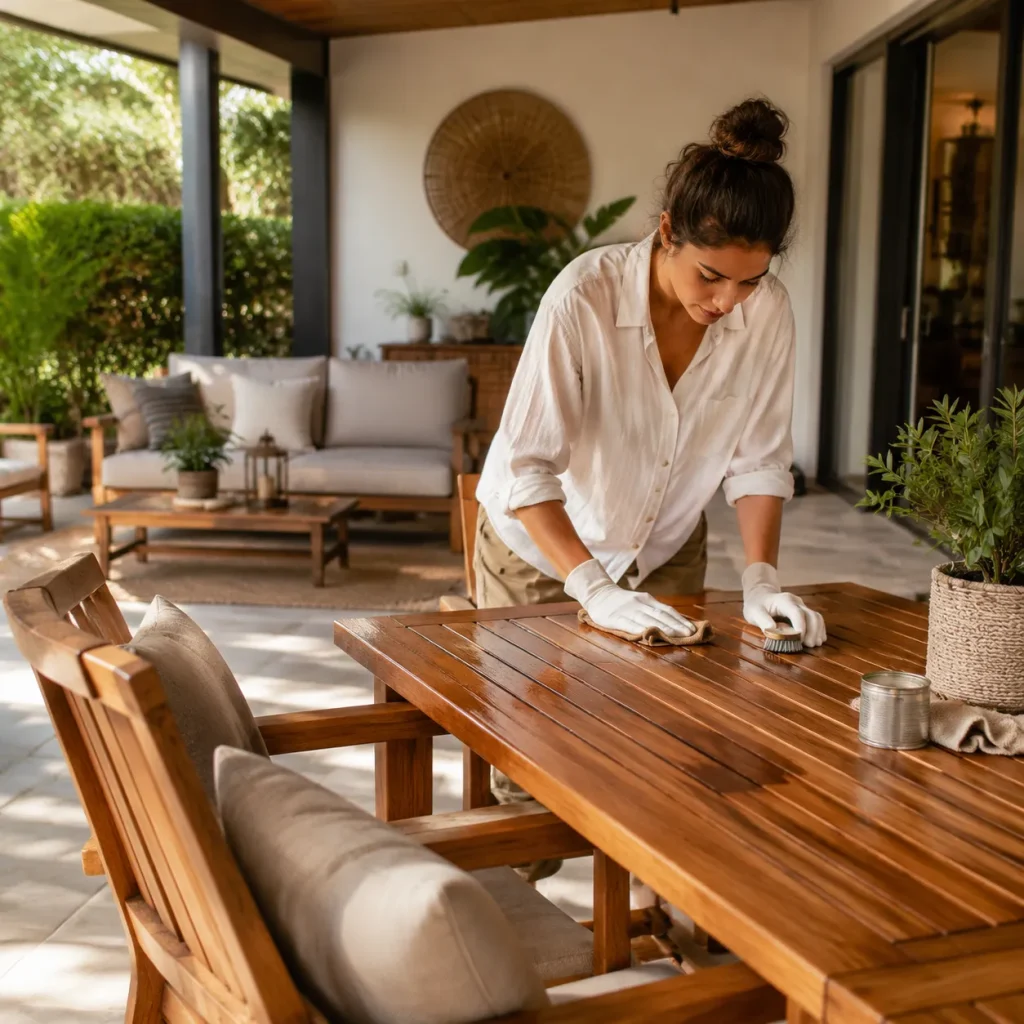
Wood adds timeless beauty to any backyard setup, but constant exposure to humidity and sunlight takes a heavy toll. We specialize in manufacturing eco friendly outdoor furniture, and we know that proactive treatment is the key to locking out moisture and keeping timber structurally sound.
Applying Waterproof Sealants and Stains
Water absorption is the primary cause of warping, splitting, and decay in patio furniture. Applying a high-grade waterproof sealant or tinted wood stain creates an impenetrable barrier against rain and dew.
- Clear Sealants: Best for keeping the natural color of your wood intact while providing a moisture-resistant coat.
- Pigmented Wood Stains: Added pigments filter out harsh sun rays, preventing graying and solar damage.
- Pro Tip: Apply coats evenly along the direction of the wood grain, allowing full drying time between layers.
Knowing how to properly maintain outdoor furniture to last 10 years ensures your natural timber stays resilient through every season.
Using Protective Oils and Finishes
Dense hardwoods like teak, eucalyptus, and acacia rely on natural oils to maintain their elasticity and natural glow. Over time, outdoor exposure dries these natural oils out, leading to fine surface cracks.
| Finish Type | Primary Benefit | Best Used For |
|---|---|---|
| Teak Oil | Deeply penetrates dense fibers to restore warmth and block water | Teak, shorea, and dense tropical hardwoods |
| Tung Oil | Dries to a flexible, water-repellent finish that resists yellowing | Bare or soft-grain exterior wood surfaces |
| Exterior Varnish | Forms a hard surface layer against heavy wear and salt spray | Accent pieces exposed to harsh environmental elements |
Maintaining Wood Grain and Finish
Keeping wood grain sharp and vibrant requires simple, regular care rather than massive overhauls.
- Perform Light Touch-Ups: Lightly buff high-wear spots with fine-grit sandpaper before reapplying protective oil.
- Cover During Off-Peaks: Fitted, breathable furniture covers prevent trapped moisture and guard against direct sun exposure when pieces are not in use.
- Clear Spills Fast: Wipe away standing water, leaves, or bird droppings immediately to prevent deep wood stains.
Protecting Metal, Plastic, and Wicker Furniture
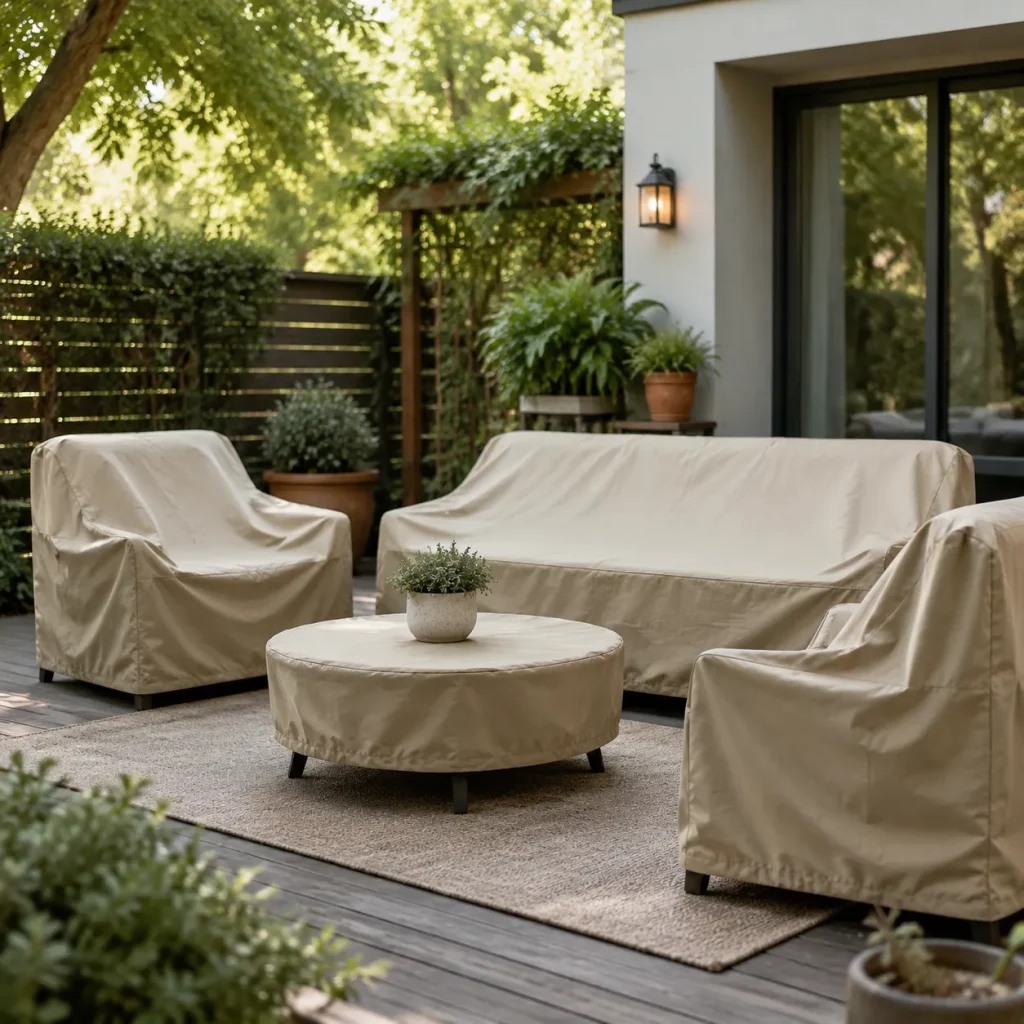
Different materials face unique threats from the elements. While wood struggles with moisture rot, materials like metal, plastic, and wicker demand specific care strategies to prevent weather damage and maintain their strength over time.
Rust Prevention Strategies for Metal
Moisture is the primary enemy of metal frames. While aluminum patio furniture excels for low-maintenance coastal homes due to its natural rust resistance, iron and steel require constant defense:
- Apply Automotive Paste Wax: Coat clean metal frames twice a year to create a barrier against rain and salt air.
- Touch Up Chips Instantly: Sand away flaking rust down to raw metal and apply a rust-inhibiting primer with matching paint immediately.
- Inspect Foot Caps: Ensure rubber or plastic end caps stay intact so water doesn’t pool inside hollow frame tubing.
UV Protection for Plastic and Resin
Harsh sunlight breaks down plastic and resin molecules, making pieces brittle, faded, and prone to cracking.
- Apply UV Protectant Spray: Wipe down plastic surfaces twice a season with a dedicated UV protectant spray to prevent chalking and discoloration.
- Avoid Harsh Cleaners: Stick to gentle soap and warm water. Abrasive scrubbers create micro-scratches that trap dirt and speed up UV degradation.
- Use Breathable Covers: Keep resin pieces shielded with fitted furniture covers during prolonged periods of high heat and sunlight.
Sealing and Caring for Wicker
Wicker adds great texture to any outdoor space, but both natural plant fibers and synthetic resin weaves need targeted care to stay tight and flexible.
- Seal Natural Wicker: Apply a fresh coat of clear marine varnish every 1–2 years to lock out moisture and prevent splitting.
- Clear Out Trapped Debris: Dust and dirt settle deep into the weave. Vacuum woven surfaces regularly using a soft brush attachment before wiping down.
- Keep Synthetic Resin Cool: Wash synthetic wicker with mild soap and avoid exposing it to extreme localized heat, which can stretch and deform plastic weaves.
How to Protect Outdoor Cushions and Fabrics
Outdoor cushions and soft textiles bring comfort and color to your patio, but they take the brunt of sun exposure and moisture. Protecting these materials keeps your setup soft, clean, and vibrant season after season.
Applying UV and Water-Repellent Sprays
Sunlight breaks down fabric fibers and bleaches bright colors, while rain creates a breeding ground for bacteria. Applying a specialized fabric protectant creates an invisible shield against both elements.
- Clean First: Always wash and thoroughly dry cushions before spraying to avoid sealing in dirt.
- Even Application: Hold the fabric guard spray 6–8 inches away and apply a light, overlapping coat over all surfaces, including seams and zippers.
- Reapply Regularly: Treat high-use fabric every 3 to 6 months to maintain water resistance and UV protection.
Preventing Mold and Mildew Growth
Trapped moisture is the primary cause of fabric rot and foul odors. When choosing an outdoor sofa, opting for quick-drying reticulated foam and water-repellent fabrics makes moisture control much simpler, but proper care is still essential.
- Flip Cushions on Edge: After heavy rain, stand cushions up on their sides so water drains quickly out of the bottom seams.
- Wipe Up Spills Fast: Food crumbs, drink spills, and organic matter provide food for mold spores. Spot-clean messes immediately using mild soap and warm water.
- Promote Airflow: Never stack wet cushions on top of each other or leave them pressed tightly against solid surface walls.
Storing Cushions During Bad Weather
The easiest way to protect soft furnishings from severe weather damage is to keep them out of the elements when not in use.
- Deck Boxes: Keep a heavy-duty, waterproof deck box close to your seating area for fast daily storage during unexpected rainstorms.
- Breathable Fabrics: Avoid sealing cushions in airtight plastic bags during the off-season. Use breathable fabric storage bags to prevent condensation buildup.
- Indoor Winter Storage: Always store patio cushions indoors, in a basement, garage, or shed, during freezing winter months.
Seasonal Care and Weatherproofing Techniques
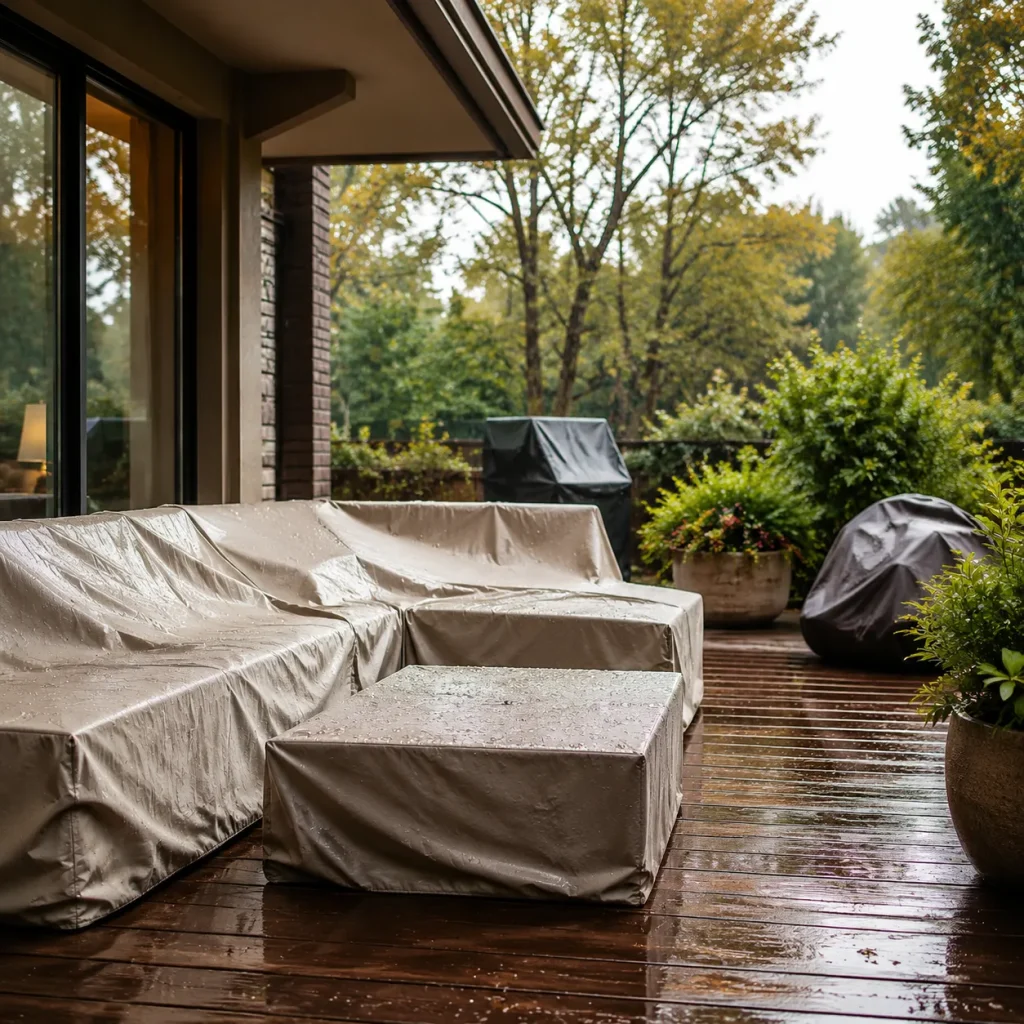
Adapting your protection routine to changing seasons prevents severe weather damage and keeps your setup looking pristine year-round. Knowing how to protect outdoor furniture year-round comes down to three core habits: proper covering, smart layout placement, and timely off-season storage.
Choosing High-Quality Outdoor Covers
Investing in heavy-duty furniture covers is your first line of defense against ambient moisture, dirt, and relentless sunlight.
- Select Breathable Fabrics: Choose solution-dyed polyester or heavy-duty canvas with built-in mesh vents to prevent mold-inducing condensation.
- Prioritize Secure Fits: Look for covers equipped with drawstring hems, buckled straps, or elastic corners so they remain secure during high winds.
- Prevent Water Pooling: Use air bags or cover elevated supports underneath so rainwater slides off instead of gathering on flat surfaces.
Utilizing Umbrellas and Covered Spaces
Positioning your arrangement beneath awnings, pergolas, or cantilever umbrellas significantly cuts down direct sun exposure and shields frames from driving rain. Even high-performing durable low-maintenance patio sets benefit from partial overhead shade during peak heat hours, which helps reduce long-term thermal stress and color fading.
Proper Winterization and Off-Season Storage
Cold climate preparation demands proactive care. Leaving pieces exposed to freezing rain and ice can cause structural micro-cracks, rust, or material warping.
| Material Type | Recommended Winterization Strategy |
|---|---|
| Natural Wood | Clean and dry completely, then relocate premium pieces like luxury teak patio sets to a ventilated shed or garage. |
| Metals & Plastics | Wash down, apply a protective wax, and elevate off wet ground under fitted covers if indoor space is limited. |
| Cushions & Fabrics | Store in breathable fabric bags or sealed bins in a climate-controlled area after thorough air-drying. |
For effective winter storage, always verify that every piece is completely dry before wrapping or storing to avoid locking in dampness over the cold months.
Routine Maintenance for Long-Lasting Patio Furniture
Knowing how to protect outdoor furniture isn’t just about big seasonal overhauls—it comes down to simple, consistent care. Taking proactive steps prevents premature weather damage and keeps your setup looking fresh year-round.
Setting a Regular Cleaning Schedule
Consistency is key to protecting your investment. Establishing a basic cleaning routine stops dirt and grime from degrading protective finishes over time.
- Weekly Wipe-Downs: Sweep off loose debris, leaves, and pollen using a soft brush or microfiber cloth.
- Monthly Deep Clean: Wash surfaces using mild soap, warm water, and a soft sponge. Rinse thoroughly to prevent residue build-up.
- Proactive Care: Choosing durable outdoor furniture designs makes routine cleaning significantly easier and extends the life of your set.
Rotating Furniture to Even Out Sun Exposure
Constant UV rays cause uneven fading on your patio furniture and fabric over time. Simple adjustments ensure everything wears evenly:
- Shift Layouts: Reorganize your seating arrangement every few weeks so all pieces receive balanced sunlight.
- Flip Cushions: Rotate and flip outdoor fabric cushions regularly to equalize sun exposure and preserve foam structure.
Inspecting for Early Signs of Wear and Tear
Catching small issues early stops them from turning into major repairs. Conduct a quick monthly inspection across all pieces:
- Check Surface Coatings: Look for flaking in your wood stain or waterproof sealant layers on timber pieces.
- Spot-Check Metals: Inspect metal frames for tiny paint chips or early rust spots, treating them immediately with protective touch-up paint.
- Tighten Hardware: Check bolts, screws, and structural joints to ensure your furniture remains sturdy and completely safe to use.