1. Sizing and Layout Mistakes That Waste Outdoor Space
Failing to Measure Patio Dimensions Accurately
Eyeballing a deck or balcony before purchasing patio furniture leads to expensive returns and awkward setups. Precise spatial measurements ensure your outdoor sofa fits the space without blocking entry points or architectural features.
- Map the footprint: Lay painter’s tape on the deck floor matching the exact length and depth of the desired sofa.
- Check door swings: Leave ample space for patio doors, screen doors, and storage chests to swing open fully.
- Account for fixed structures: Measure clear distances from pillars, handrails, outdoor heaters, and fire pits.
Choosing the Wrong Scale and Proportion for the Area
Visual scale matters just as much as physical dimensions. A massive section will overwhelm a small balcony, while a delicate loveseat gets lost on an expansive patio.
| Outdoor Area | Common Scale Mistake | Recommended Sofa Scale |
|---|---|---|
| Compact Balcony / Small Deck | Deep, high-back sectionals that block sightlines | Low-profile 2-seater sofas or armless modular units |
| Spacious Deck / Large Patio | Undersized, isolated 2-piece seating | Broad L-shaped or U-shaped modular outdoor sofas |
Ignoring Traffic Flow and Spatial Zoning
Unplanned placement disrupts everyday outdoor living by forcing people to squeeze past furniture or step over coffee tables.
- Maintain walk paths: Keep at least 30 to 36 inches of clear pathway around high-traffic walkways.
- Zone by function: Separate conversational sofa arrangements from high-heat grill zones and dining areas.
- Optimize table reach: Position coffee tables within 14 to 18 inches of sofa cushions for effortless reach without restricting legroom.
2. Material Selection Errors That Lead to Early Replacement
Selecting Cheap Frame Materials Unsuited for Outdoor Use
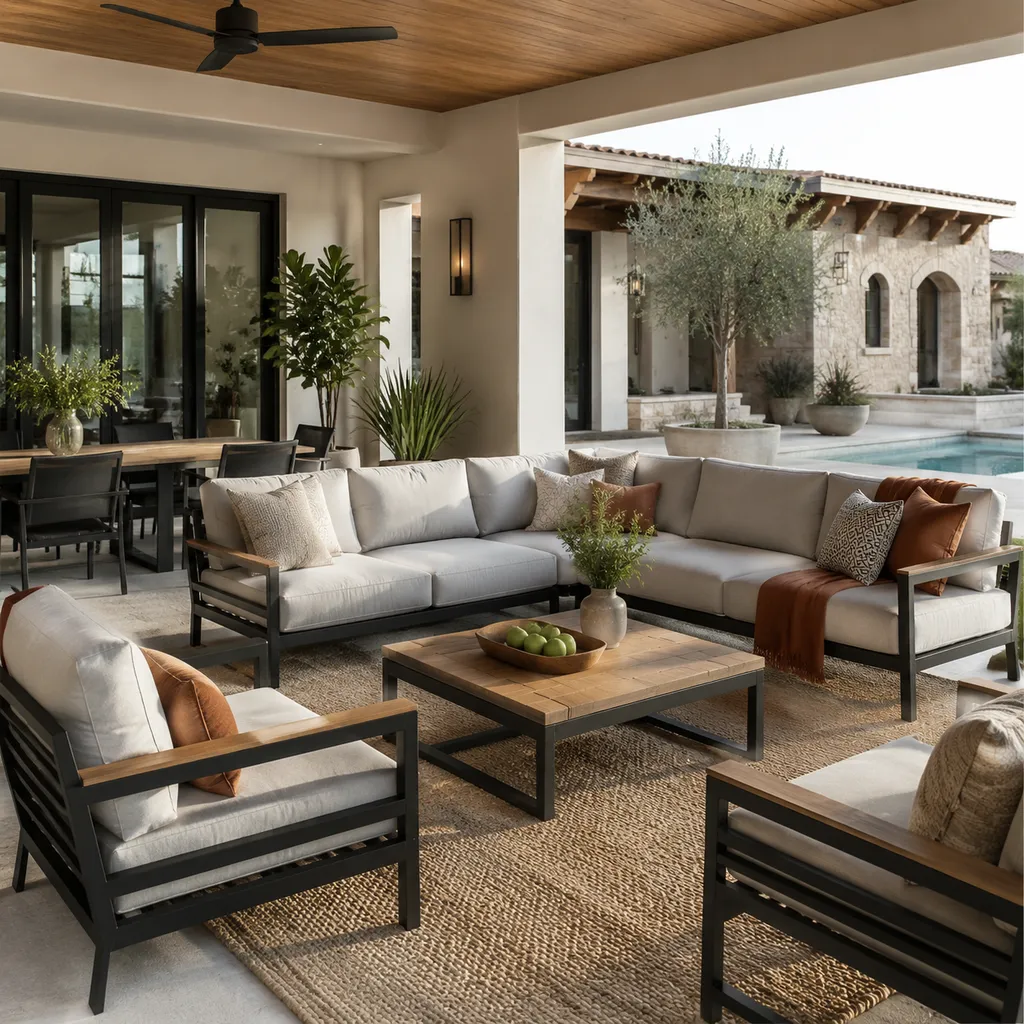
Choosing an outdoor sofa based purely on initial appearance often leads to selecting inferior frame construction. Standard hollow steel rusts from the inside out within a single season, while untreated softwoods quickly rot and warp when exposed to ambient moisture.
To ensure structural longevity, prioritize high-grade frame materials engineered specifically for outdoor environments:
Rustproof Aluminum: Heavy-duty, powder-coated aluminum provides maximum strength without rusting or degrading.
Teak Wood: Dense, natural hardwood packed with oils that inherently repel water, pests, and rot.
All-Weather Wicker: High-density polyethylene (HDPE) resin hand-woven over a non-corrosive metal frame to resist cracking and UV degradation.
Understanding outdoor sectional sofa materials ensures your patio furniture foundation lasts for years rather than months.
Ignoring Local Climate and Weather Conditions
A frame material that thrives in dry, sunny climates can fail rapidly in humid, coastal areas. One of the costliest outdoor sofa buying mistakes is ignoring how your specific environment attacks structural components.
- Coastal & Salt Air Areas: Require marine-grade aluminum or premium teak wood; standard steel corrodes in months.
- Rainy & High-Humidity Regions: Demand moisture-wicking frames and quick-drying foam options. Selecting dedicated weather-resistant outdoor furniture sets prevents deep moisture retention and mold growth.
- Intense UV Environments: Require UV-stabilized resins and solution-dyed textiles to stop fading, cracking, and material breakdown under constant direct sunlight.
Sacrificing Material Durability for a Lower Upfront Price
Low-cost outdoor seating looks attractive on paper, but cheap construction guarantees rapid failure. Budget furniture routinely relies on thin-gauge metals, low-density cushion core fillings, and non-treated fabrics that deteriorate after one season.
Replacing a bargain outdoor sofa every two to three years costs significantly more over time than investing upfront in engineered durability. Focus on verified weather resistance, structural frame guarantees, and high-density fabric options to secure real long-term value.
3. Comfort and Fabric Blunders That Ruin Usability
Prioritizing Visual Style Over Ergonomics and Comfort
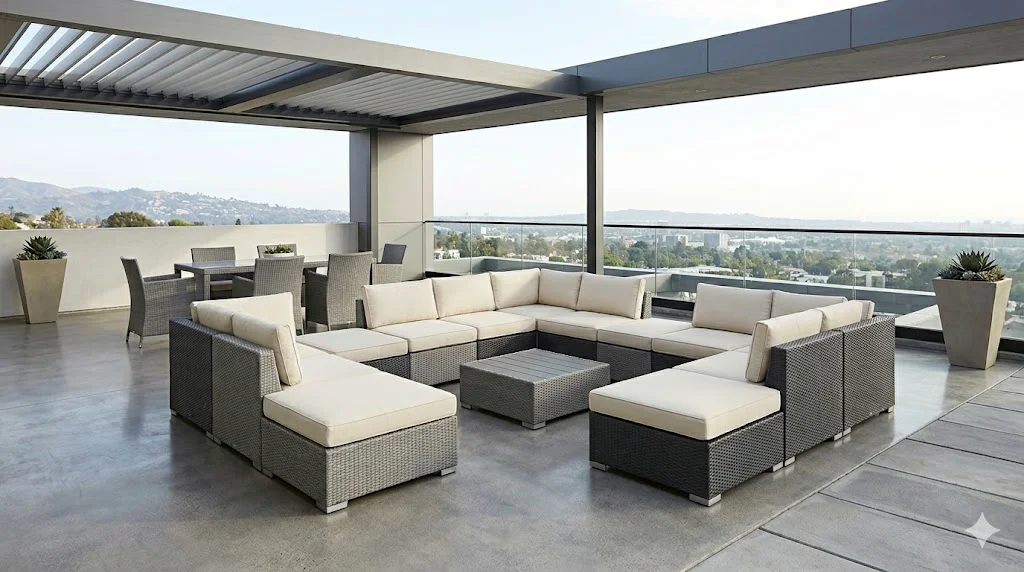
A sleek, ultra-modern patio setup might look stunning in pictures, but low backrests and rigid angles quickly turn relaxation into physical discomfort. Never sacrifice ergonomics for aesthetics. Check for adequate seat depth, supportive back angles, and proper seating height so your patio furniture remains inviting for long gatherings.
Selecting Low-Grade, Non-Weather-Resistant Cushion Fabrics
Standard fabrics deteriorate rapidly under direct sunlight and rain, fading and fraying within a single season. As we specialize in manufacturing outdoor sofas, we consistently advise choosing high-performance textiles engineered for maximum weather resistance. Upgrading to marine-grade or solution-dyed fabrics prevents moisture penetration and color bleaching, ensuring you select the best outdoor sofa cushions for ultimate comfort and longevity.
- Solution-Dyed Acrylic: Offers top-tier UV resistance and colorfastness.
- Water-Repellent Coatings: Forces rainwater to bead up and roll off rather than soaking into fibers.
- Zippered Cushion Covers: Allows easy removal for routine cleaning and seasonal care.
Choosing Cheap Cushion Filling That Sags Quickly
Low-density poly-fill and basic indoor foam absorb water like a sponge, causing structural collapse and persistent mildew smells. High-quality fill materials protect your seating investment:
- Quick-Dry Foam: Uses an open-cell structure that allows water to drain rapidly after heavy rainfall.
- High-Resilience Polyurethane Core: Retains structural firmness and bounces back after repeated daily use.
- Layered Fiber Wraps: Adds surface softness while resisting moisture retention inside the cushion.
4. Protection and Storage Oversights That Cause Premature Wear
Buying a high-quality sofa is only half the investment. Failing to shield your setup from the elements leads to structural rot, faded fabrics, and unnecessary replacement costs.
Forgetting to Plan for Off-Season Storage Solutions
Leaving your furniture exposed to severe winter frost or endless rain significantly shortens its lifespan.
- Measure Storage Spaces First: Check your garage, shed, or basement clearance before buying oversized sectionals.
- Select Modular Designs: If indoor off-season storage space is tight, pick modular pieces that disassemble or stack neatly.
- Store Cushions Dry: Always store cushion covers and foam cores in dry, climate-controlled areas to stop mold spores from taking hold.
Skipping High-Quality Protective Furniture Covers
Bargain covers or cheap tarps do more harm than good by trapping moisture underneath, accelerating frame corrosion and fabric rot.
| Cover Feature | Core Benefit |
|---|---|
| Built-in Air Vents | Stops condensation and mildew buildup under the cover |
| UV-Resistant Layer | Prevents intense sunlight from breaking down the cover material |
| Secure Strap Buckles | Keeps high-wind storms from blowing protection away |
Invest in custom-fitted, heavy-duty covers engineered with waterproof linings to preserve frame material integrity and cushion durability.
Neglecting Routine Cleaning and Frame Maintenance
Dust, tree sap, and pollen act like sandpaper on protective finishes. Letting grime sit permanently damages protective coatings on teak wood and all-weather wicker frames.
- Rinse frames monthly with clean water and mild soap.
- Spot-clean cushion fabrics immediately after spills to avoid deep stains.
- Inspect hardware annually for early signs of rust or loose bolts.
Learning how to clean and protect outdoor furniture like a pro preserves your patio furniture investment and keeps your outdoor living space ready for entertaining year-round.
5. Styling and Configuration Mistakes That Limit Versatility
Buying Rigid Matching Sets Instead of Modular Furniture
Locking yourself into traditional, fixed-frame patio furniture sets severely limits how you use your outdoor space. Static sofa designs cannot adapt when hosting larger gatherings or reconfiguring your deck for different seasons.
- Lack of Layout Flexibility: Fixed sofas cannot split, extend, or shift to fit evolving spatial layouts.
- The Modular Advantage: Modular outdoor sofas let you rearrange individual sections—such as corner units, armless chairs, and ottomans—into sectionals, daybeds, or separate seating arrangements tailored to any occasion.
Overlooking Sun Shade and Element Shelter Needs
Placing an outdoor sofa in full exposure to raw weather accelerates wear, regardless of the frame material quality. Unfiltered UV rays degrade fabric dyes, while constant rainfall weakens frame seals over time.
- Element Degradation: Direct sun causes fading, cracking, and material stress on all-weather wicker and basic fabrics.
- Strategic Placement: Position seating under pergolas, shade sails, or covered porches to preserve weather resistance and double the lifespan of your setup. To match your shade setup with high-performance fabrics, check out our luxury outdoor furniture guide to styles and materials.
Ignoring Multi-Functional and Dual-Purpose Pieces
Buying individual pieces for single functions inflates your total spend and clutters your patio space. Maximizing your investment means choosing versatile items that do double duty.
- Hidden Storage: Select ottomans or sofa bases with built-in storage to keep cushion covers dry and safe during storms.
- Built-in Utility: Choose sectional pieces with integrated side tables or drop-down trays to cut out the cost of extra coffee tables.
- Smart Layout Savings: Versatile furniture keeps compact spaces clear while offering maximum seating. Read our comprehensive buying guide for garden furniture to pick multi-use configurations that lower your long-term costs.
6. Financial Strategy Blunders That Cost Money Long-Term
Focusing on Initial Price Rather Than Cost-Per-Year Value
A low price tag is tempting, but smart buyers evaluate cost-per-year value instead. Buying a budget setup that degrades after two seasons forces you into an expensive replacement cycle. Investing in high-grade frame materials and premium fabrics yields far better long-term returns over a 10-year period. In our manufacturing process, we focus on structural longevity so your initial investment continues paying off season after season. You can review our direct breakdown on rattan vs aluminum outdoor furniture to see how upfront material choices directly influence long-term savings.
Falling for Low-Quality Luxury Furniture Imitations
Visual knockoffs often copy high-end designer pieces in online photos, but they compromise heavily on structural integrity. These cheap imitations rely on thin-gauge metals, untreated wicker, and low-density cushion foam that sags and fades rapidly. True durability requires specialized outdoor engineering built to resist moisture and UV degradation. Explore our outdoor lounge furniture guide for luxury homes to learn how to identify genuine premium craftsmanship before buying.
Overlooking Warranty Coverage and Maintenance Costs
Skipping warranty details and routine upkeep calculations leads to unexpected out-of-pocket expenses later. We always encourage clients to evaluate what protection comes built into their purchase.
- Frame Guarantees: Verify structural coverage against broken welds, warping, and severe corrosion.
- Fabric Protection: Ensure cushion covers carry explicit anti-fading warranties (typically 3 to 5 years for solution-dyed fabrics).
- Hidden Upkeep: Factor in the long-term cost of specialized cleaning treatments, replacement pads, and winter storage covers.