Planning your wedding flowers shouldn’t mean worrying about wilting petals, sudden weather shifts, or skyrocketing floral costs.
That’s why more brides are making the smart move to artificial bridal bouquets.
They are hypoallergenic, completely weather-resistant, and serve as a lasting keepsake long after your big day. But knowing whether to invest in ultra-realistic Real-Touch flowers, budget-friendly silk botanicals, or a custom blend can make or break your overall wedding aesthetic.
In this guide, you’re going to learn the exact differences step by step—from texture and photography performance to cost breakdowns, ordering timelines, and post-wedding repurposing.
Let’s dive right in.
Why Choose Artificial Bridal Bouquets?
Modern wedding florals have evolved far beyond basic plastic replicas. High-quality wedding artificial flowers offer unmatched aesthetic perfection, ensuring your bridal arrangement looks flawless from early morning preparations to the late-night send-off.
Durability and Keepsake Value
Fresh blooms fade within days, but premium faux flowers preserve your wedding memories for a lifetime.
- Lifetime Keepsakes: Repurpose your bridal arrangement into lasting home decor or preserve it as a meaningful family heirloom.
- Structural Integrity: Blooms remain vibrant, sturdy, and perfectly shaped regardless of handling throughout the event.
- Travel-Ready Convenience: Ideal for destination weddings, easily surviving flight transit without bruising, crushing, or water leakage.
Stress-Free Planning and Weather Resistance
Designing your wedding timeline becomes effortless with permanent botanicals. You can secure your exact color palette months ahead of time without relying on unpredictable seasonal flower yields or sudden price spikes.
| Performance Factor | Fresh Bridal Flowers | Artificial Bridal Bouquets |
|---|---|---|
| Pre-Wedding Delivery | 24–48 hours before | Months in advance |
| Extreme Weather Impact | Wilts in heat; turns black in frost | 100% weather resistant |
| Hydration Needs | Requires continuous water supply | Zero moisture needed |
| Color Consistency | Varies by farm harvest batch | Guaranteed exact shade match |
Hypoallergenic and Allergy-Friendly Option
Seasonal allergies, strong natural fragrances, and airborne pollen can ruin photo moments and cause discomfort. Opting for an allergy friendly bouquet guarantees a seamless experience for the bride, bridal party, and guests.
- Pollen-Free Assurance: Eliminates sneezing, watery eyes, and skin irritation during photos and vows.
- Scent-Neutral Comfort: Prevents perfume-induced headaches caused by heavy, aromatic fresh blooms like lilies or gardenias.
- Stain Prevention: Zero risk of yellow pollen rubbing off onto delicate white silk, lace, or satin gowns.
Types of Artificial Wedding Flowers
Not all faux blooms are built the same. When selecting high-quality wedding artificial flowers, understanding the underlying materials helps you choose the right texture, weight, and visual realism for your ceremony.
Real-Touch Flowers
Real-touch stems represent the absolute peak of modern floral replication. Made from specialized liquid polymers or polyurethane (PU), these premium blooms mimic the exact texture, damp softness, and density of freshly cut petals.
- Best For: Bridal bouquets, boutonnieres, and close-up photographic details.
- Key Feature: Unmatched tactile realism that feels natural to the touch.
Traditional Silk Flowers
Silk florals remain a reliable staple for grand-scale event styling. Modern silk flowers utilize woven polyester fabrics treated with UV-resistant coatings to prevent fraying and maintain rich color depth.
- Best For: Centerpieces, floral arches, and wide-coverage aisle decor.
- Key Feature: Lightweight construction and an unlimited range of custom color shades.
Alternative Faux Materials (Foam, Wood, and Plastic)
Beyond fabric and polymers, alternative materials provide specific functional benefits for specialized floral designs:
- Latex Foam: Cost-effective, soft to the touch, and ideal for tightly structured rose arrangements.
- Sola Wood: Hand-carved from natural wood fiber; ideal for rustic aesthetics and custom dye matching.
- Molded Plastic: Engineered for heavy filler foliage, structural greenery, and weather-exposed outdoor installations.
Real-Touch vs. Silk Flowers: Key Differences
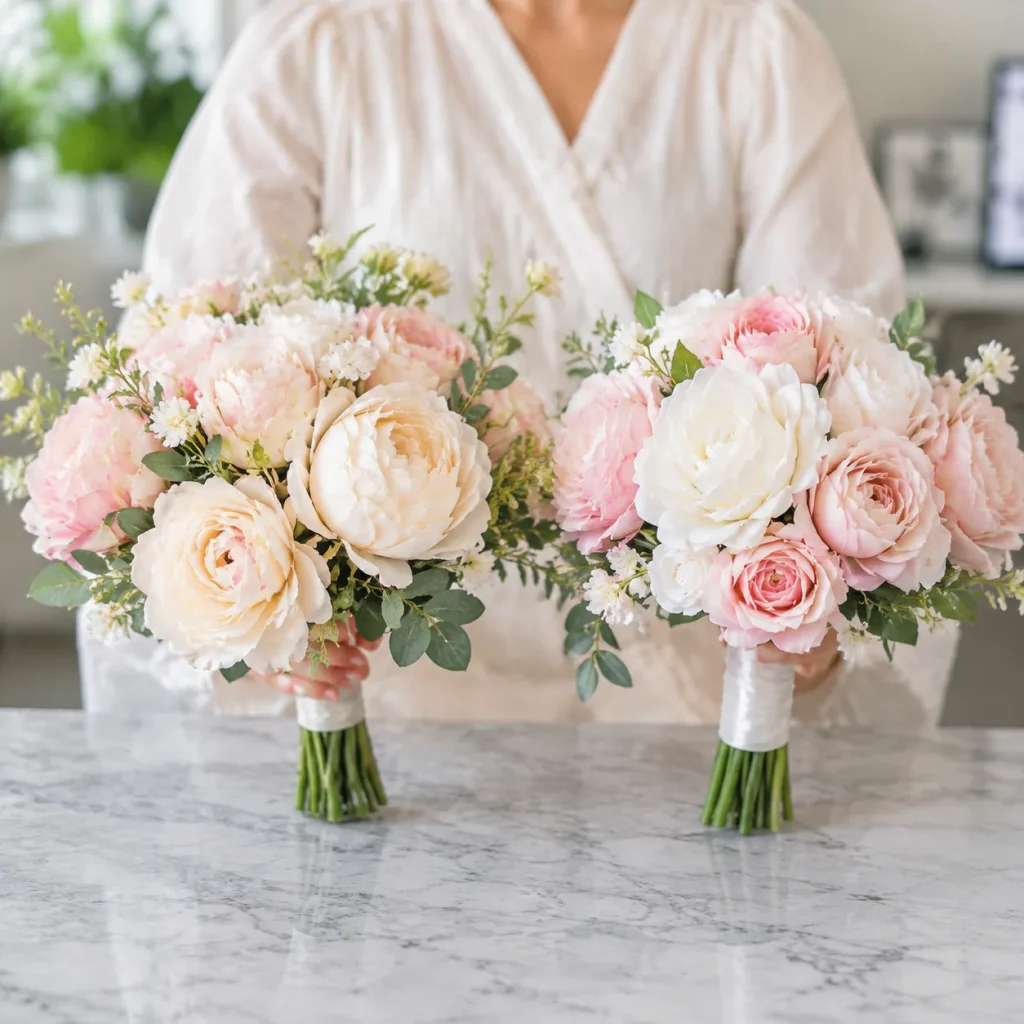
Choosing between real-touch stems and traditional silk botanicals for artificial bridal bouquets comes down to texture, camera performance, outdoor resilience, and price. Both options create stunning wedding florals, but their material properties serve different needs.
Texture and Realistic Feel
- Real-Touch Flowers: Made with a specialized liquid polymer or latex coating over fabric. They feel cool, soft, and slightly damp—mimicking the exact fleshy texture of fresh-cut petals.
- Traditional Silk Flowers: Crafted from woven polyester or nylon blends. While soft and smooth, they feel like high-quality fabric rather than living botanical tissue.
Visual Appearance and Photography Performance
High-definition wedding photography captures every detail, making material selection crucial for close-ups.
- Real-Touch Botanicals: Feature 3D-molded, seamless petal edges with realistic color gradients. They absorb flash naturally without glare, ensuring your faux flowers look completely natural in 4K photos.
- Silk Botanicals: Offer rich, vibrant colors and a classic, soft-focus aesthetic. Under extreme macro camera lenses, slight fabric weave textures or raw edge threads may occasionally show.
Durability and Outdoor Resistance
Outdoor weather can challenge delicate floral arrangements. Material choice dictates how your wedding artificial flowers handle the elements.
| Feature | Real-Touch Flowers | Traditional Silk Flowers |
|---|---|---|
| Moisture Handling | Completely waterproof; handles rain and dew | Can spot or dis-color if soaked |
| Shape Memory | Flexible latex coating bounces back if crushed | Can wrinkle or crease under heavy pressure |
| Sun & Heat Resistance | Holds shape and color in hot, humid climates | Long exposure to bright sun may cause fading |
| Ideal Venue | Beach, garden, and high-humidity outdoor weddings | Indoor chapels, ballrooms, and covered receptions |
Price Comparison and Cost Breakdown
- Real-Touch Stems ($$$): Require a higher investment due to advanced liquid-molding manufacturing. They are best reserved for focal points like the bridal bouquet, boutonnieres, and head table arrangements.
- Silk Stems ($$): Highly budget-friendly and widely available. Excellent for high-volume installations like floral arches, backdrops, and guest centerpieces.
How to Choose the Best Artificial Flowers for Your Bouquet
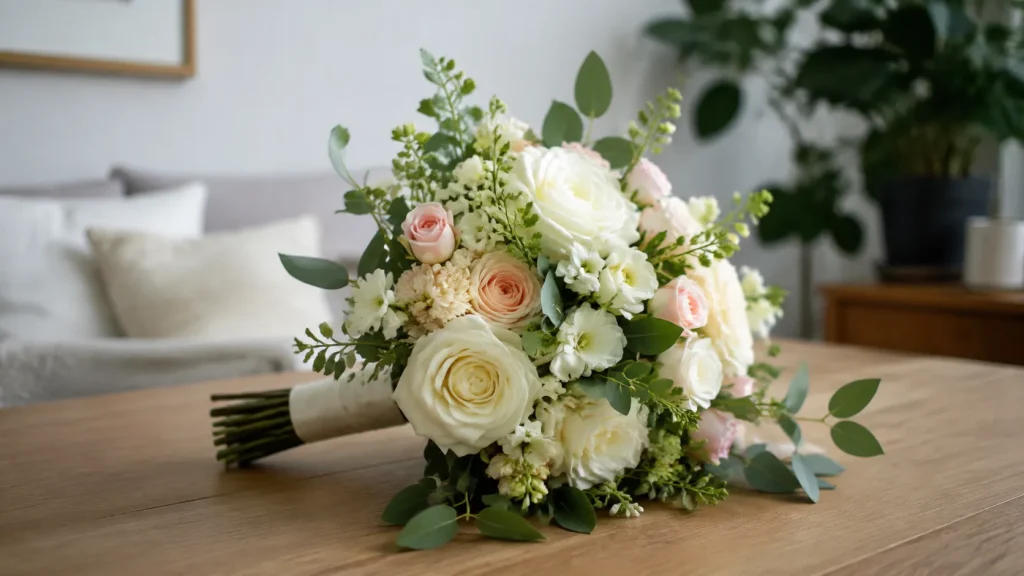
Selecting the right wedding artificial flowers comes down to your budget, tactile preferences, and how close guests or cameras will get to your arrangements. We always recommend evaluating where high realism matters most versus where lightweight, cost-effective stems can shine.
When to Choose Real-Touch Blooms
Real-touch latex flowers excel in high-visibility roles where realistic texture and convincing details make all the difference.
- Bridal Bouquets: Essential for your primary handheld arrangement that receives close-up photography.
- Boutonnieres and Corsages: Ideal for wearable pieces that family and guests will see and touch up close.
- Specific Floral Varieties: Best for thick-petaled blooms like roses, calla lilies, orchids, and tulips.
When to Choose Silk Botanicals
Traditional silk faux flowers offer exceptional flexibility, vibrant color options, and budget efficiency across larger floral displays.
- Large Event Arrangements: Great for floral arches, ceremony backdrops, and overhead hangings.
- Reception Centerpieces: Excellent for venue tables viewed from a short distance.
- Complex Flower Types: Best for multi-layered, delicate blossoms like peonies, dahlias, and hydrangeas.
Mixing Real-Touch and Silk for a Balanced Bouquet
Combining both materials gives you maximum visual impact while optimizing your overall floral budget.
| Bouquet Element | Recommended Floral Type | Key Advantage |
|---|---|---|
| Focal Blooms | Real-Touch Flowers | Realistic texture and premium close-up appearance |
| Accent Flowers | Traditional Silk Flowers | Adds volume, rich color depth, and variety |
| Greenery & Fillers | Permanent Botanicals | Delivers natural structure and framing |
Using real-touch blooms for your focal points and surrounding them with quality silk botanicals allows you to design stunning, lasting keepsakes while keeping overall costs balanced.
Ordering and Storage Timeline for Faux Wedding Florals
Timing your order correctly guarantees your wedding florals arrive stress-free and remain in pristine condition until you walk down the aisle.
When to Order Your Bridal Bouquets
I always advise locking in your artificial bridal bouquets well ahead of your date. Unlike fresh stems that arrive hours before the ceremony, permanent botanicals give you the luxury of advance preparation.
- Custom Floral Designs: Order 4 to 6 months prior to the wedding. This timeframe covers design consultations, material sourcing, and assembly.
- Pre-made Arrangements: Order 2 to 3 months in advance. This leaves ample buffer time for transit, final dress fittings, and bridal portraits.
- Destination Weddings: Secure your faux flowers 3 to 4 months early so you can practice packing them safely in your travel luggage.
How to Store Artificial Flowers Before the Big Day
Proper storage keeps real-touch and silk flowers clean, vibrant, and perfectly shaped.
| Recommended Storage Practices | What to Avoid |
|---|---|
| Keep in a cool, dry closet away from extreme heat or humidity. | Avoid direct sunlight, which can alter flower dyes and degrade latex over time. |
| Store upright in tall vases or suspended upside down to preserve petal shape. | Don’t stack boxes or place heavy objects on top of stems to prevent crushing. |
| Cover loosely with breathable cotton or paper to block dust. | Avoid sealed plastic bags, as trapped moisture damages real-touch petal coatings. |
A quick fluffing of the outer petals a day or two before the ceremony is all it takes to make your bouquet camera-ready.
Care, Maintenance, and Post-Wedding Repurposing
One of the biggest advantages we see with artificial bridal bouquets is their effortless longevity. Proper care ensures your wedding florals transition smoothly from ceremony highlights to timeless home accents.
Cleaning and Maintaining Faux Florals
Maintaining permanent botanicals requires very little effort to keep them looking picture-perfect:
- Routine Dusting: Use a soft paintbrush or a hairdryer on the cool, low setting to sweep away surface dust without damaging petals.
- Silk Flower Spot Cleaning: Lightly dab fabric petals with a warm, damp microfiber cloth. Never submerge silk flowers directly in water.
- Real-Touch Flower Care: Gently wipe latex petals with a damp cloth to remove oils or fingerprints. Avoid alcohol-based cleaners that can erode the protective real-touch coating.
- Sun Protection: Display and store your faux flowers away from prolonged, direct sunlight to prevent color fading over time.
Repurposing Your Bridal Bouquet for Home Decor
Instead of tucking your bouquet away in a closet, transform your arrangement into functional home decor and cherished keepsakes:
- Tabletop Centerpieces: Place the bouquet straight into a statement vase for your dining room table, or pair the arrangement on a patio table with outdoor lounge furniture for an elevated entertaining space.
- Shadow Box Keepsakes: Frame the main focal blooms alongside your invitation, boutonniere, and ribbon inside a sealed glass display box.
- Wreaths and Swags: Deconstruct leftover stems and foliage to craft a custom front door wreath or mantel display.
Frequently Asked Questions About Artificial Bridal Bouquets
Are Real-Touch Flowers Worth the Extra Cost?
Yes. Real-touch blooms feature a liquid latex coating that captures the exact texture, weight, and vein details of fresh petals. They do not fray, droop, or feel paper-thin.
- Tactile Realism: Guests cannot tell the difference visually or by touch during close-up interactions.
- Permanent Keepsakes: They transition effortlessly into lasting home decor after your big day.
- Smart Budgeting: Reserve premium real-touch stems for focal points like bridal bouquets and boutonnieres. For large backdrop displays or floral arches, sourcing bulk stems directly from a trusted artificial flower manufacturer in China stretches your overall budget significantly.
Do Faux Flowers Look Realistic in Wedding Photography?
Modern high-grade wedding artificial flowers photograph exceptionally well under natural sunlight and studio flashes.
- Zero Wilting: Faux flowers maintain perfect structure and rich color from early prep photos through the evening reception.
- Matte Finish: High-end silk and latex materials absorb flash naturally without producing artificial glare or plastic shine on camera.
- Flawless Detail: You never have to worry about bruised petals, brown edges, or drooping stems ruining close-up macro shots.
Can You Mix Real Flowers with Artificial Bouquets?
Blending fresh blooms with realistic faux florals is one of the smartest strategies for optimizing your wedding budget.
- Seamless Blending: Combine delicate, high-fragrance fresh flowers with high-quality artificial focal stems to create volume without losing natural texture.
- Cohesive Arrangements: Ensure color palettes and greenery types match across your bouquets, corsages, and centerpieces for a uniform visual flow.
- Scalable Decor: Incorporating commercial-grade artificial plants and permanent botanicals into venue arrangements allows you to design massive, lush installations that hold up in any climate.