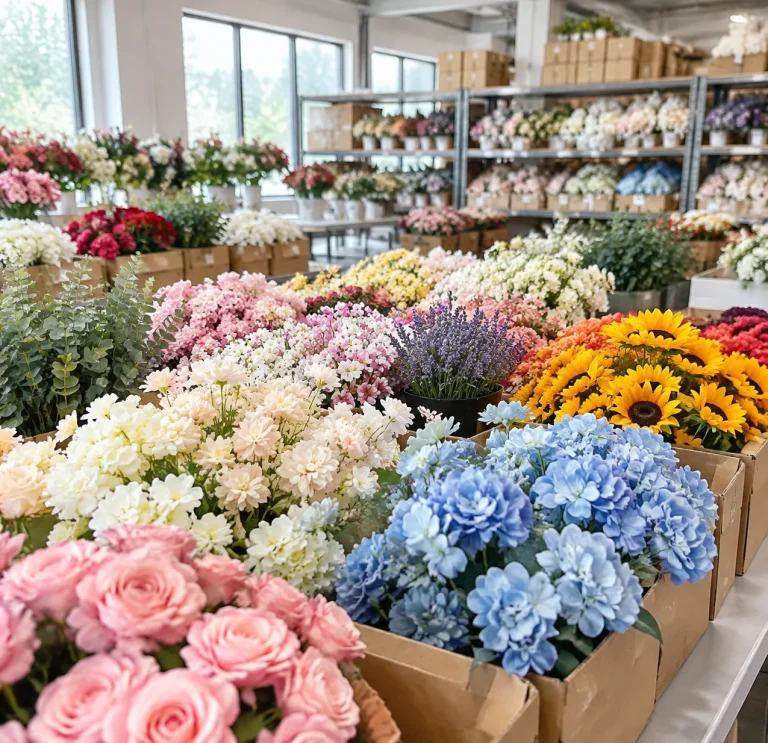

Understanding the Core Materials: Silk, PU, and Real-Touch Flowers
In commercial artificial floral procurement, material selection determines product performance, unit economics, and client satisfaction. Sourcing managers and floral wholesalers must balance visual fidelity, tactile appeal, and unit costs. Three primary material compositions dominate the B2B market: woven polyester (traditional silk), polyurethane (PU), and coated polymers (real-touch).
What Are Traditional Silk (Fabric) Flowers?
Despite the historical name, modern “silk” artificial florals are manufactured from industrial-grade synthetic fabrics, predominantly woven polyester, nylon, and rayon blends.
- Manufacturing Process: Fabric sheets are precision die-cut into petal profiles, dyed or heat-transfer printed, and molded via heat presses to create natural petal curves.
- Core Characteristics: Lightweight construction, versatile dye reception for complex color gradients, and fray-resistant finished edges.
- Sourcing Profile: Ideal for high-volume retail, large-scale floral backdrops, and suspended commercial installations where low unit cost and compact shipping volume are primary drivers.
What Are PU (Polyurethane) Artificial Flowers?
Polyurethane (PU) florals represent a shift from flat fabric pressing to 3D liquid injection molding, utilizing elastomeric polymer foam.
- Manufacturing Process: Liquid PU resin is injected into high-precision three-dimensional molds, capturing micro-textures, organic petal thicknesses, and seamless vein structures without raw fabric edges.
- Core Characteristics: Resilient, semi-flexible rubbery hand feel, 3D structural memory, and realistic petal thickness.
- Sourcing Profile: Suited for modern minimalist botanical lines—especially single-stem Calla Lilies, Tulips, and Orchids—targeting mid-tier to premium consumer retail.
What Are Real-Touch Flowers and Coated Polymers?
Real-touch florals represent the highest tier of tactile realism in the synthetic botanical industry, engineered to simulate the natural turgidity and moisture of fresh-cut botanicals.
- Manufacturing Process: Premium polyester bases or molded cores are treated with a specialized liquid polymer coating or liquid latex blend, sealing the surface with a flexible, moisture-mimicking layer.
- Core Characteristics: Distinct cool-to-touch sensation, substantial petal weight, micro-embossed surface veining, and high visual realism under direct inspection.
- Sourcing Profile: The preferred choice for luxury hospitality, high-end bridal design, and close-up commercial staging where authentic touch and visual perfection are mandatory.
Real-Touch vs. Silk vs. PU: Key Performance & Feature Comparison
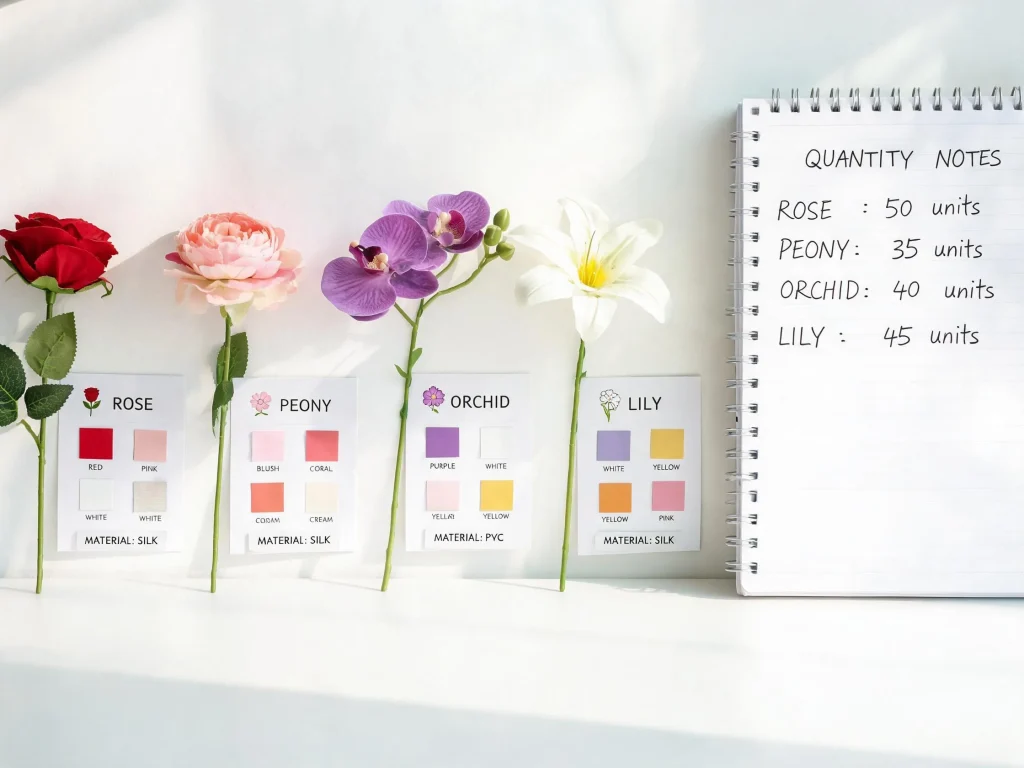
When evaluating materials for commercial inventory, comparing tactile fidelity, resilience, and upkeep requirements side-by-side helps identify the best fit for your product catalog.
| Evaluation Parameter | Real-Touch | Silk (Polyester) | PU (Polyurethane) |
|---|---|---|---|
| Tactile Realism | High / Ultra-realistic | Low to Moderate | Moderate to High |
| Durability & Longevity | High (indoor) | High (all-purpose) | Moderate (indoor) |
| UV / Weather Resistance | Low (unless coated) | Moderate to High | Low to Moderate |
| Relative Unit Cost | High | Low | Medium |
| CBM / Shipping Efficiency | Heavy / Bulky | Light / Highly compressible | Medium compression |
| Common MOQ Tiers | Custom mold / Mid-High | Low to Medium | Medium |
Visual Realism and Tactile Texture
- Real-Touch (Coated Polymer / Latex): Delivers unmatched tactile realism. The liquid polymer coating mimics the natural moisture, weight, and cool surface of living botanicals, making them ideal for close-up inspection.
- Traditional Silk (Woven Polyester): Offers rich visual realism and versatile dye absorption for intricate petal gradients. While soft, the fabric texture does not mimic botanical dampness. Sourcing premium wholesale silk wedding flowers real touch at lower cost allows buyers to balance classic fabric aesthetics with cost efficiency.
- PU (Polyurethane Faux Florals): Features 3D-molded, seamless petal edges and a soft, rubbery hand-feel. It excels at replicating fleshy, single-petal stems such as tulips and calla lilies.
Durability, Flexibility, and Environmental Resistance
- Real-Touch: Maintains structural integrity under light handling, but the outer coating remains sensitive to high humidity and intense UV exposure unless stabilized.
- Silk: Fabric petals resist tearing and maintain their shape across varied indoor climates, offering all-purpose durability for high-traffic environments.
- PU: Polyurethane foam resists minor mechanical compression, but prolonged outdoor exposure can accelerate surface degradation if UV inhibitors are absent.
Lifespan, Colorfastness, and Maintenance Needs
- Real-Touch: Best suited for climate-controlled indoor settings. Cleaning requires wiping with a damp cloth rather than harsh washing to protect the polymer surface.
- Silk: Boasts excellent fade resistance and straightforward maintenance over multi-year commercial displays. Learn standard operational procedures through our guide on how to clean and maintain silk flowers.
- PU: Delivers reliable mid-term indoor lifespan; requires standard dry dusting and storage away from direct sunlight to mitigate potential color oxidation over time.
B2B Cost Analysis and Manufacturing Considerations
Balancing material selection with landed costs is critical when managing bulk floral procurement. Production expenses, tooling requirements, and lead times differ significantly between woven polyester silk, PU foam, and coated real-touch botanicals. Understanding these manufacturing variables helps buyers optimize product margins while meeting specific market expectations.
Unit Production Costs and Price-to-Value Ratio
The cost structure of artificial flowers depends on raw material inputs, molding complexity, and labor intensity during assembly:
- Traditional Silk (Polyester): Offers the lowest unit production cost. Automated die-cutting and high-speed heat pressing keep manufacturing expenses minimal, delivering high volume margins for budget-conscious markets.
- PU (Polyurethane) Florals: Sits in the mid-range price tier. Liquid injection molding requires dedicated molds and precise temperature control, creating seamless botanical structures with balanced unit economics.
- Real-Touch (Coated Polymer / Latex): Represents the highest unit cost. Each piece requires secondary dipping or hand-applied liquid polymer coatings over fabric bases, resulting in premium tactile realism that commands higher retail price points.
Minimum Order Quantities (MOQs) and Production Lead Times
Material processing methods directly influence supplier MOQs and factory scheduling:
- Silk Botanicals: Standard raw fabric availability keeps the minimum order quantity lower, typically ranging from 300 to 500 pieces per SKU for standard colors. Standard production lead times average 20 to 30 days.
- PU Formulations: Mold preparation and raw polyurethane chemical batching usually require MOQs of 500 to 1,000 pieces per colorway. Production cycles run approximately 30 to 45 days.
- Real-Touch Lines: Specialized polymer dipping baths require precise formulation runs. MOQs generally start at 1,000 pieces per style, with lead times extending to 35 to 50 days depending on multi-layer curing stages.
Customization (OEM/ODM) and Color-Matching Flexibility
Customizing stems for seasonal collections requires understanding how each substrate handles pigments, textures, and bespoke molds.
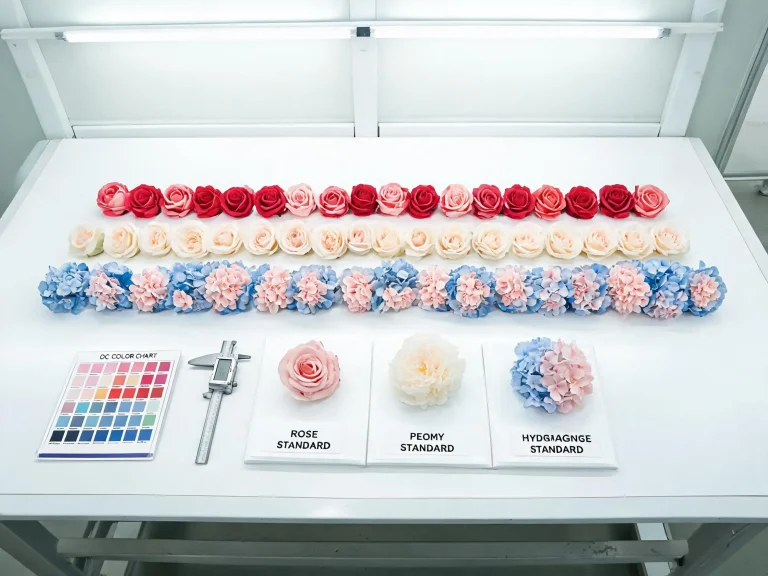
- Silk Fabrics: Offer superior color-matching flexibility. Woven synthetic fibers readily absorb roller printing, digital sublimation, and gradient airbrushing to match precise Pantone references.
- Polyurethane (PU): Pigments are blended directly into the liquid foam compound before injection. While solid tones are highly consistent, complex multi-color gradients require secondary surface spraying.
- Coated Polymers: Creating unique flower heads requires custom aluminum tooling followed by calibrated coating formulations. Leveraging specialized OEM ODM capabilities ensures custom molds replicate exact petal veining, stem thickness, and natural elasticity without compromising structural integrity.
Packaging, Freight, and Quality Control for Importers
Landed margins depend heavily on how materials handle container freight and storage. Each flower material presents distinct logistics challenges, from volumetric weight (CBM) constraints to transit vulnerability.
Resistance to Shipping Compression and Deformation
The physical behavior of artificial florals under ocean transit compression determines unpacking labor and final product presentation:
- Traditional Silk (Woven Polyester): Highly resilient. Fabric petals can withstand tight master-carton compression without structural failure. Any minor creasing quickly relaxes upon steaming or light manipulation.
- PU (Polyurethane) Flowers: Moderate compression tolerance. While polyurethane foam has good structural bounce-back, prolonged exposure to heat and high-stacking pressure during transit can create permanent fold lines or flattened petal shapes.
- Real-Touch (Coated Polymers/Latex): Lowest compression tolerance. Heavy pressure can cause polymer coatings to stick together, crack, or permanently deform. Unpacking damaged stems compromises visual quality, making it difficult for florists to learn how to arrange artificial wedding flowers like a pro without extensive steaming and reshaping.
Export Packaging Standards and Container Space Optimization
To balance protection with freight economics, we implement material-specific packaging protocols:
- Silk Florals (Maximized CBM Efficiency): Packed in bulk polybags within heavy-duty, 5-ply export cartons. This achieves the lowest freight cost per unit due to superior carton density.
- PU Florals (Abrasion Prevention): Packed with individual petal protective sleeves or compartmentalized inner boxes to prevent surface-to-surface friction and premature color transfer during ocean transit.
- Real-Touch Florals (Structured Support): Shipped in reinforced inner cartons with cardboard dividers, blister trays, or individual stem strapping. While this increases overall CBM by 30% to 45% compared to silk, it ensures the delicate coating arrives intact.
- Climate Protection: Desiccant packs are mandatory in every master carton containing PU and Real-Touch products to prevent humidity buildup and coating deterioration during sea transport.
Quality Inspection Standards and Acceptable Defect Rates
We standardise pre-shipment inspections using the AQL (Acceptable Quality Limit) 2.5 / 4.0 standard across all production lines. Key inspection checkpoints vary by material:
- Real-Touch Quality Checks: Verified for uniform polymer film thickness, absence of chemical off-gassing odors, edge coating adhesion, and zero petal stickiness.
- PU Flower Quality Checks: Inspected for seam line flashing from molds, micro-bubble porosity in the foam, petal-to-calyx tensile strength, and color consistency across dye lots.
- Silk Flower Quality Checks: Scrutinized for petal edge fraying, hot-glue stringing, wire core exposure, and colorfastness under dry/wet crocking tests.
Strict adherence to these inspection criteria ensures goods arrive ready for retail distribution, effectively resolving client concerns over whether fake wedding flowers look tacky when delivered to high-end commercial venues.
Target Market Segmentation and Application Scenarios

Matching the right floral material to your project or retail channel protects your margins and satisfies your client base. Real-touch coated polymers, woven polyester silk, and polyurethane faux florals each serve distinct commercial use cases.
High-End Events, Luxury Weddings, and Hospitality Décor
For spaces where guests interact with arrangements up close, tactile realism is critical.
- Best Material: Real-touch (latex/liquid polymer coating) and premium PU flowers.
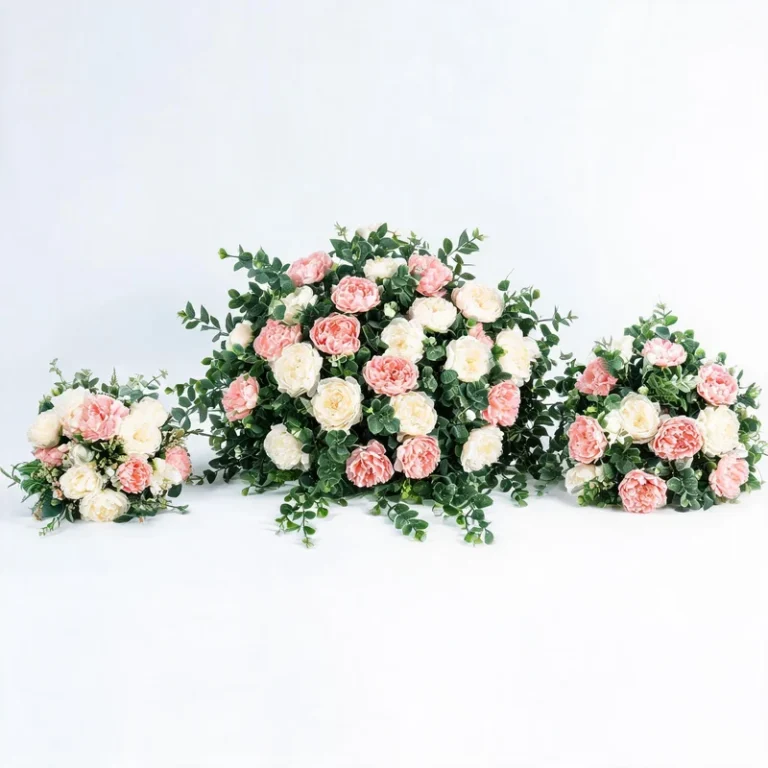
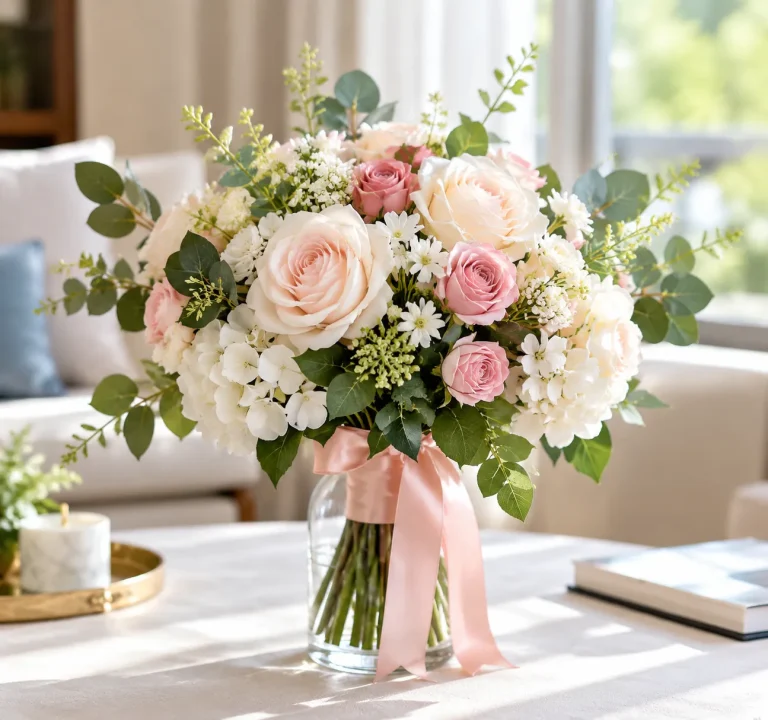
- Key Commercial Uses: Luxury bridal bouquets, 5-star hotel concierge desks, VIP private event centerpieces, and intimate floral displays.
- Why It Works: Petals have a natural, moist feel and thick cross-sections that mimic fresh-cut botanicals under bright lighting and close-up photography. When planning bespoke event inventory, consulting our bulk artificial flowers wholesale complete buyers guide helps balance premium material costs against client budgets.
| Application | Recommended Material | Key Advantage |
|---|---|---|
| Bridal Bouquets & Tablescapes | Real-Touch / Coated Polymer | Lifelike texture and visual weight |
| Hotel Lobbies & VIP Suites | High-Grade PU (Calla Lilies, Tulips) | Sculpted, modern aesthetic |
Mass Retail, E-Commerce, and Budget Home Decor
High-volume sales channels demand low unit costs, structural resilience, and high packaging density to minimize landed freight expenses.
- Best Material: Traditional silk (woven polyester fabric).
- Key Commercial Uses: Department store seasonal aisles, home decor chains, flat-packed floral bundles, and e-commerce product listings.
- Why It Works: Polyester floral stems are lightweight, highly compressible, and resist crushing during transit. They pack tightly into export master cartons, dramatically lowering your shipping cost per CBM while offering accessible retail price points for everyday consumers.
Commercial Installations and Long-Term Visual Merchandising
Large-scale corporate and commercial projects prioritize durability, light weight, and low maintenance over close-up tactile feel.
- Best Material: High-density polyester silk and structural faux greenery.
- Key Commercial Uses: Overhead ceiling hangings, backdrop floral walls, retail window displays, airport atriums, and restaurant overhead canopies.
- Why It Works: Synthetic fabrics offer strong fade resistance under commercial indoor lighting and exert minimal stress on hanging structures. Sourcing wholesale artificial flowers direct from China allows commercial contractors to purchase the extensive square meterage required for full-scale architectural builds without overextending procurement budgets.
B2B Sourcing Guide: How to Select the Right Material & Supplier
Choosing between real-touch, silk, and PU artificial flowers comes down to balancing tactile realism, budget constraints, and channel requirements. Securing a reliable manufacturing partner ensures your chosen materials meet product specifications, safety regulations, and delivery timelines.
Sample Evaluation and Material Stress Testing
Before committing to mass production, we always recommend ordering a pre-production sample batch to run critical stress tests:
- Compression & Recovery Test: Pack the sample under moderate weight for 48 hours to check its structural recovery. Polyurethane faux florals and silk petals should spring back quickly without permanent creasing.
- Tactile & Seam Inspection: For real-touch stems, verify that the liquid polymer coating is smooth, uniform, and free of peeling edges or sticky residues.
- Wash & Fade Resistance: Wipe petals with a damp cloth and expose them to direct light to evaluate colorfastness and adhesive integrity.
Factory Audits, Certifications, and Environmental Compliance
Material safety and standardized manufacturing directly affect your brand’s reputation and border clearance. When partnering with a wholesale floral supplier, we focus on three non-negotiable standards:
- Raw Material Safety: Ensure PU foams and latex blends use low-VOC, odorless formulations compliant with international import standards.
- OEM ODM Capabilities: Verify the factory’s tooling and color-matching capabilities, including custom Pantone dyeing for woven polyester and molded PU heads.
- Process Consistency: Confirm automated temperature controls during the curing of real-touch coatings to prevent uneven petal thickness across bulk batches.
Supply Chain Reliability and After-Sales Logistics Support
A dependable manufacturing relationship protects your profit margins against delays, shipping damages, and seasonal bottlenecks.
- Clear MOQ & Lead Time Agreements: Lock in agreed production timelines and realistic minimum order quantity terms before initiating tooling or dye batches.
- Export-Ready Packaging: Insist on reinforced five-ply inner cartons and moisture-barrier master cases to protect delicate flower heads from humidity and pallet compression.
- Defect Compensation Protocols: Establish upfront terms for acceptable AQL (Acceptable Quality Limit) standards and clear replacement policies for deformed or miscolored units.
Frequently Asked Questions (FAQ) for B2B Floral Buyers
Are PU and Real-Touch flowers waterproof and washable?
Yes, both polyurethane and coated polymer materials handle moisture far better than standard fabric stems. However, their cleaning and care protocols differ based on material composition:
- Real-Touch Flowers: Coated with a liquid polymer or latex layer, these petals resist light moisture and can be wiped clean with a damp cloth. Submerging them in water for extended periods is not recommended, as moisture can weaken the bonded layers over time.
- PU Flowers: Polyurethane foam petals are water-resistant and withstand gentle rinsing or surface wiping, making them ideal for humid commercial displays.
- Maintenance Comparison: While classic fabric blooms in our wholesale artificial flowers collections tolerate dry dusting, polymer-based lines allow quick spot cleaning without losing their petal structure or texture.
Do PU flowers yellow or degrade during long-distance transit?
Untreated polyurethane can undergo surface oxidation and yellowing when exposed to heat, humidity, and UV rays inside shipping containers. We mitigate these supply chain risks through strict manufacturing and packing controls:
- UV Stabilizer Additives: Integrating anti-yellowing agents during the raw foam molding stage protects light-colored petals from premature discoloration.
- Climate-Controlled Curing: Proper post-mold curing prevents trapped moisture from breaking down the elastomer structure during sea freight.
- Moisture-Barrier Packaging: Using sealed inner polybags with desiccant packs ensures stems remain dry and stable across multi-week ocean transit routes.
Which flower material offers the highest profit margins for wholesalers?
Profit margins depend on your retail channel and distribution model:
- High-Volume Margin (Silk / Polyester): Standard fabric stems provide the lowest unit cost and maximum container loading efficiency (low CBM). They yield dependable margins for mass-market retail, large venue backdrops, and fast-turnover seasonal catalogs.
- High-Markup Value (Real-Touch & PU): Premium coated florals command significantly higher retail prices due to their realistic touch and lifelike petal thickness. Incorporating them into specialized inventory, such as luxury wedding artificial flowers and hospitality arrangements, allows B2B distributors to achieve superior gross margins per stem.