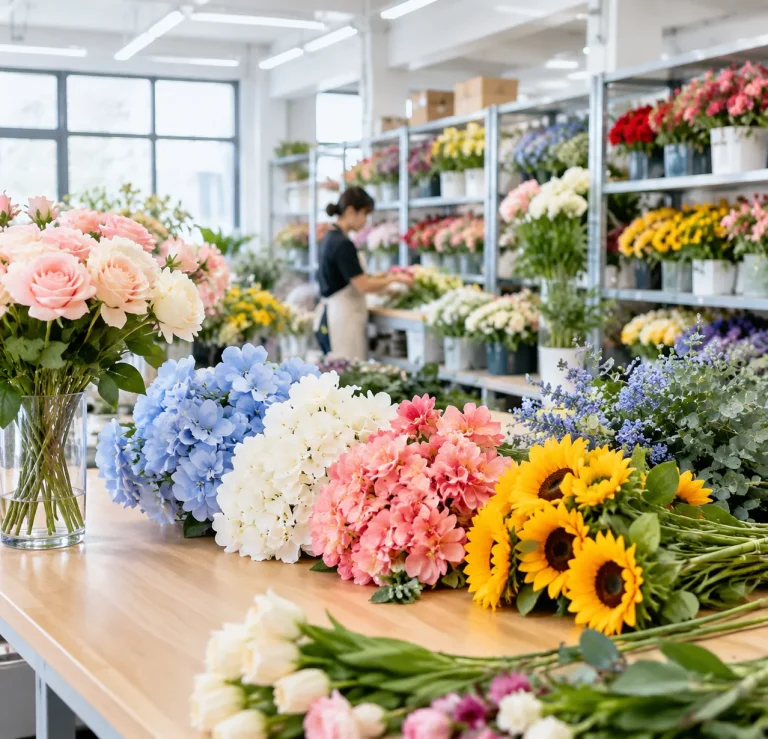

Are middleman markups silently eating away at your profit margins?
If you are sourcing faux florals for retail, weddings, or large commercial projects, going straight to the source is the ultimate game-changer.
In this guide, you’ll learn the insider strategy for sourcing factory-direct artificial flowers: how to get wholesale pricing without middlemen.
From vetting legitimate manufacturers and testing premium materials to negotiating factory MOQs and calculating true landed costs, this step-by-step blueprint covers it all.
Let’s dive right in.
Why Buy Factory-Direct Artificial Flowers?
Sourcing artificial blooms directly from the manufacturing floor is the most effective strategy for commercial buyers, event designers, and bulk retailers to secure competitive pricing. Partnering with a dedicated source factory eliminates third-party commissions, ensures strict quality control, and gives you direct oversight of the entire production process.
Eliminating Middleman Markup for Maximum Profit Margins
Purchasing through distributors, local brokers, or third-party agents introduces unnecessary overhead that erodes bottom-line profits. Working directly with a primary faux floral manufacturer provides clear commercial advantages:
- Removal of Agency Fees: Intermediaries routinely add a 20% to 50% surcharge to cover their own overhead and commission. Factory-direct procurement strips these costs out completely.
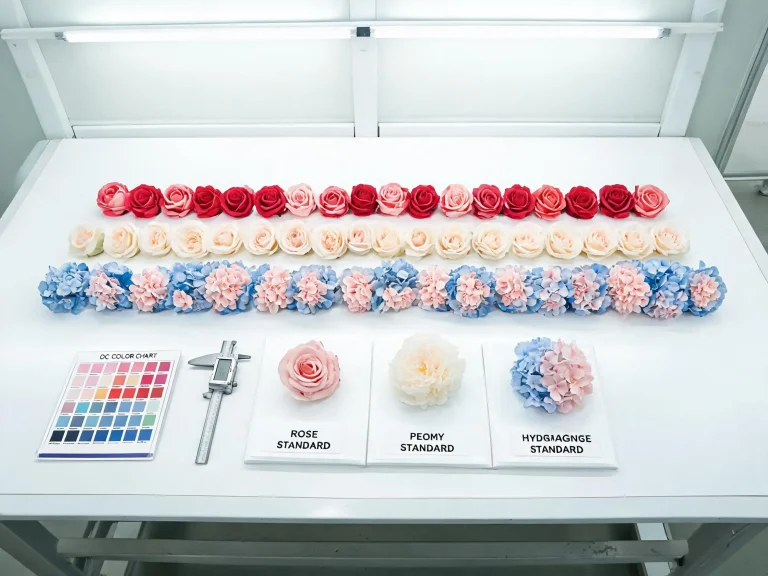
- Direct Quality Assurance: Communicate directly with the factory floor to enforce exact Pantone color matching, realistic petal textures, and durable wire-stem constructions.
- Scalable Volume Discounts: Factory contracts reward high-volume, bulk purchasing with aggressive, tier-based price breaks that trading companies often keep for themselves.
- Faster Turnaround Times: Direct production scheduling eliminates intermediary lag, ensuring quicker sample approvals and dependable shipping windows.
Factory Price vs. Trading Company Pricing Breakdown
Understanding the real cost structure between a source factory and an intermediary clarifies the impact on overall landed cost:
| Cost Factor | Direct Factory Sourcing | Trading Company / Broker | Commercial Impact |
|---|---|---|---|
| Unit Price Baseline | True EXW / FOB Base Rate | Factory Base + 20%–50% Markup | Significantly lower per-stem acquisition cost |
| Customization (OEM/ODM) | Full access to custom molds, dyes, and packaging | Limited to catalog items or marked-up custom fees | Complete product differentiation at lower cost |
| Sample Development | Rapid prototyping directly from production lines | Delayed turnaround due to third-party relay | Faster market-entry for seasonal collections |
| Supply Chain Transparency | Full visibility into raw materials (Silk, PU, PE) | Hidden factory origins and opaque material sourcing | Consistent batch-to-batch quality reliability |
Direct sourcing provides the financial and operational leverage needed to protect profit margins and scale artificial floral inventory efficiently.
Understanding Artificial Flower Materials and Quality Tiers
When sourcing factory-direct artificial flowers to secure true wholesale pricing without middlemen, knowing your raw materials is the key to balancing unit cost and realism. Production lines categorize floral stems into distinct material grades based on durability, petal texture, and manufacturing complexity.
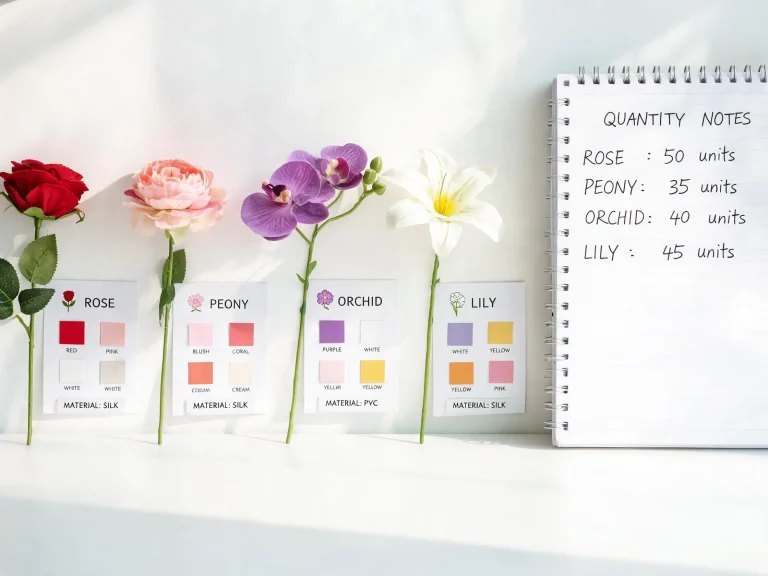
Silk and Fabric Flowers
Fabric blooms—often called silk flowers—remain the volume backbone of the faux floral industry. Most modern commercial versions use high-density polyester, pongee, or blended synthetic textiles.
- Manufacturing Process: Fabric layers are precision die-cut or laser-cut, heat-pressed into molds to form realistic veins, and dip-dyed or airbrushed.
- Key Advantages: Highly cost-effective for large bulk orders, lightweight for export shipping, and easy to package tightly.
- Commercial Application: Ideal for budget-conscious retail arrangements, high-volume event backdrops, and seasonal retail displays. Buyers also value them because commercial clients can easily clean and maintain silk flowers across multi-year store installations.
Real-Touch and PE Blooms
Real-touch technology bridges the gap between synthetic stems and fresh botanicals. These premium blooms combine liquid polyurethane (PU) or advanced polyethylene (PE) coatings over a molded textile base.
- Tactile Realism: The PU liquid coating mimics the moisture, cool temperature, and velvety texture of fresh flower petals.
- Structural Durability: PE injection-molded stems and leaves resist tearing, maintain their shape under humid conditions, and prevent color bleeding.
- Commercial Application: High-end wedding arrangements, luxury hospitality centerpieces, and premium retail product lines where buyers demand realistic close-up visuals.
EVA Foam and Flocked Floral Elements
Ethylene-Vinyl Acetate (EVA) foam and electro-flocking provide specialized textures that standard fabrics cannot match.
- EVA Foam: Waterproof, resilient, and highly malleable under heat. Factories use EVA for oversized architectural blooms, tropical flowers like plumeria and calla lilies, and poolside or semi-outdoor floral decor.
- Flocked Elements: Involves applying millions of micro-fibers via an electrostatic field to coated stems, buds, or leaves. This creates the soft, fuzzy texture found on lamb’s ear, dusty miller, and realistic budding branches.
- Layering Value: Mixing flocked greenery and EVA accent blooms with standard fabric stems gives wholesale floral collections greater dimensional depth and perceived retail value.
How to Find and Vet Reliable Direct-from-Factory Suppliers
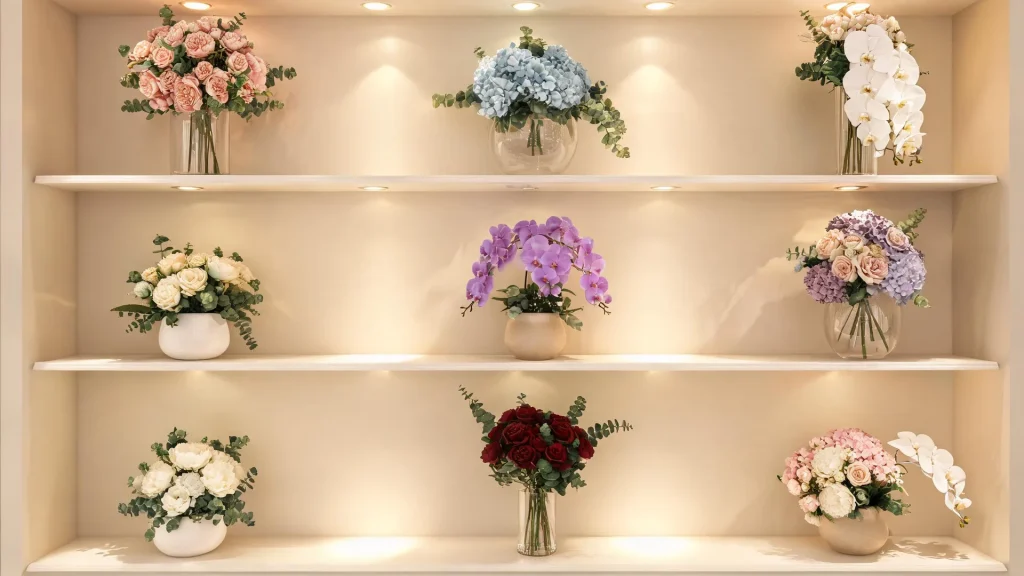
Sourcing directly from a source factory cuts overhead and protects your profit margins, but it requires a structured vetting process. Identifying true manufacturing facilities ensures consistent product quality, stable lead times, and transparent pricing.
Distinguishing True Manufacturers from Trading Companies
Trading entities frequently pose as primary manufacturers on B2B directories. We separate genuine production facilities from intermediaries using three key operational indicators:
- Catalog Focus: A true faux floral manufacturer specializes in specific production techniques—such as fabric pressing, injection molding, and PU dipping. If a vendor’s catalog simultaneously features artificial greenery, ceramic vases, lighting fixtures, and unrelated decor, you are dealing with an intermediary carrying an added trading company markup.
- Live Production Verification: We conduct on-demand video facility walkthroughs or third-party audits to inspect the raw material staging area, fabric dye vats, assembly lines, and master carton packing stations.
- Technical Fluency: Real factory engineering teams can readily provide tooling mold specs, petal weight yields, and precise resin formulations without consulting an external third party.
Evaluating Supplier Quality, Customization (OEM/ODM), and Certification
A capable manufacturing partner must deliver both volume scalability and precise technical flexibility. When assessing direct-factory capabilities, we evaluate the following operational criteria:
| Evaluation Pillar | Key Factory Requirements | Commercial Advantage |
|---|---|---|
| OEM Customization | Custom Pantone dye-matching, proprietary petal mold tooling, and private-label packaging. | Exclusive product differentiation for brand retail and floral distribution. |
| Compliance & Safety | ISO9001 factory management, REACH/RoHS material safety, and non-toxic dye certifications. | Zero customs clearance holdups and compliance with international safety standards. |
| Production Capacity | Multi-line automated and semi-automated assembly with clear daily yield metrics. | Predictable fulfillment schedules during peak commercial seasons. |
Requesting and Testing Product Samples
Never commit to volume container orders without rigorously testing actual production samples. Evaluating physical samples reveals the true grade of materials, adhesives, and structural wirework used on the floor.
- Colorfastness & Water Resistance: Submerge sample flower heads in room-temperature water for 24 hours and wipe with a clean white cloth to confirm dyes do not bleed or transfer.
- Stem Core & Petal Integrity: Flex wired stems repeatedly at 90-degree angles to verify the outer plastic coating does not crack or expose raw wire. Conduct pull tests on individual petals to ensure secure bonding to the calyx.
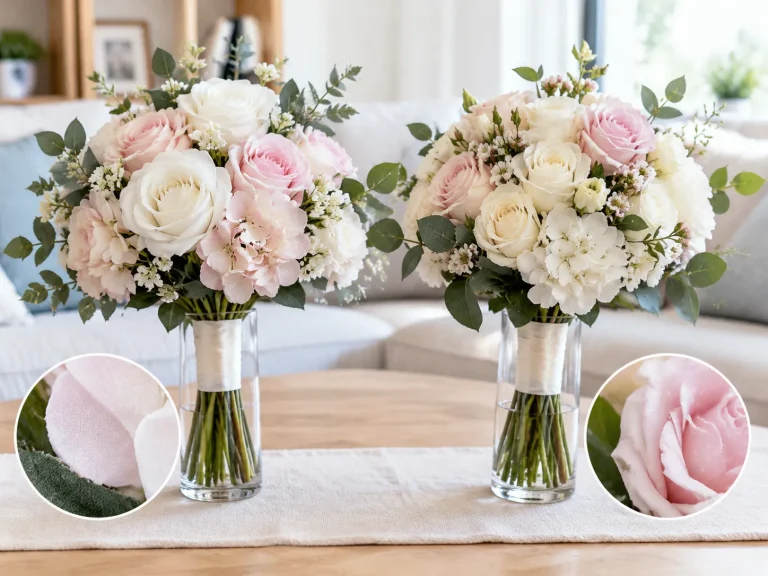
- Material Smell & Finish: Premium silk flower supplier runs use virgin polymers and non-toxic curing agents. Immediate chemical or heavy VOC odors indicate cheap recycled plastics and substandard adhesives.
Navigating Factory MOQs, Pricing Tiers, and Terms
Securing true factory pricing on bulk artificial flowers requires knowing how manufacturers set production thresholds. When you cut out trading intermediaries, you work directly within factory production cycles. Managing minimum order quantities, tiered pricing structures, and standard export payment terms protects your cash flow and ensures maximum return on your floral inventory.
Understanding Minimum Order Quantity (MOQ) Requirements
Direct faux floral manufacturers set MOQs based on raw material batching, fabric dyeing vats, and machine tooling setups rather than arbitrary retail minimums.
- Per-SKU Minimums: Typical production runs require 300 to 1,000 pieces per color/style to justify custom fabric dyeing and injection molding.
- Master Carton Rules: Factories pack stems in standard inner boxes and outer master cartons. Ordering in full carton multiples prevents carton-splitting fees and reduces transit damage.
- Material-Driven Thresholds: Standard polyester silk flowers generally carry higher MOQs due to large fabric-dye runs, while premium PU Real-Touch florals often feature lower volume minimums per mold.
Negotiating Pricing Tiers Based on Order Volume
A direct source factory prices inventory strictly by material volume and machine run time. Consolidating your bulk purchasing strategy unlocks scalable unit-cost discounts:
| Order Level | Typical Volume (Units) | Cost Advantage | Best Application |
|---|---|---|---|
| Sample / Trial Run | 100 – 300 pcs | Standard wholesale base price | Material testing, color matching, and quality verification |
| LCL Bulk Order | 1,000 – 5,000 pcs | 15% – 25% below trading company rates | Seasonal inventory, core event collections, and retail assortments |
| FCL Container Load | 10,000+ pcs (20GP/40HQ) | Maximum direct factory pricing (35%+ off) | High-volume distribution, commercial staging, and private-label programs |
Pro-Tip: If your order falls short of a single SKU minimum, negotiate to use shared raw materials—such as ordering multiple rose styles that share the same leaf molds or dye lots—to hit factory thresholds without overstocking single designs.
Payment Terms and Financing Options
Working directly with overseas manufacturers requires structured international trade terms that safeguard both parties during production and delivery:
- T/T (Telegraphic Transfer): The standard industry baseline is a 30% deposit before production begins, with the 70% balance payable upon presentation of the Bill of Lading (B/L) and inspection approval.
- Letter of Credit (L/C): For high-volume container orders, an irrevocable L/C at sight provides risk-free security for custom OEM production runs.
- Open Account Terms (Net 30/60): Once you establish steady order volume and reliable credit history over multiple production cycles, direct suppliers regularly extend credit terms to streamline recurring inventory replenishment.
Best-Selling Wholesale Categories and Commercial Applications
Sourcing directly from our production floor gives you immediate access to top-performing inventory across key commercial sectors. We engineer our product lines to match high-turnover market demands, ensuring our bulk clients secure the best profit margins.
| Product Category | Primary Materials | Key Commercial Markets | Core Applications |
|---|---|---|---|
| Event & Bridal Sets | Real-touch PU, Silk, Soft Wire Stems | Event planners, Rental firms, Venues | Arches, backdrops, table arrangements |
| Retail Floral Stems | Polyester, Wire-core, Hand-painted Fabric | Boutiques, Department stores, E-commerce | Individual retail displays, seasonal drops |
| Commercial Greenery | UV-resistant HDPE, Fire-retardant Fabric | Hotels, Office parks, Malls, Restaurants | Green walls, space dividers, planters |
Wedding and Event Floral Packages
Event coordinators and venue operators demand floral installations that endure heavy handling and repeated setups without wilting or shedding petals. We manufacture comprehensive sets of wedding artificial flowers built for fast assembly and transport.
- Floral Arches and Backdrops: Pre-assembled panel grids and flexible swags that dramatically cut setup time on-site.
- Table Runners and Centerpieces: High-density arrangements calibrated to standard banquet dimensions.
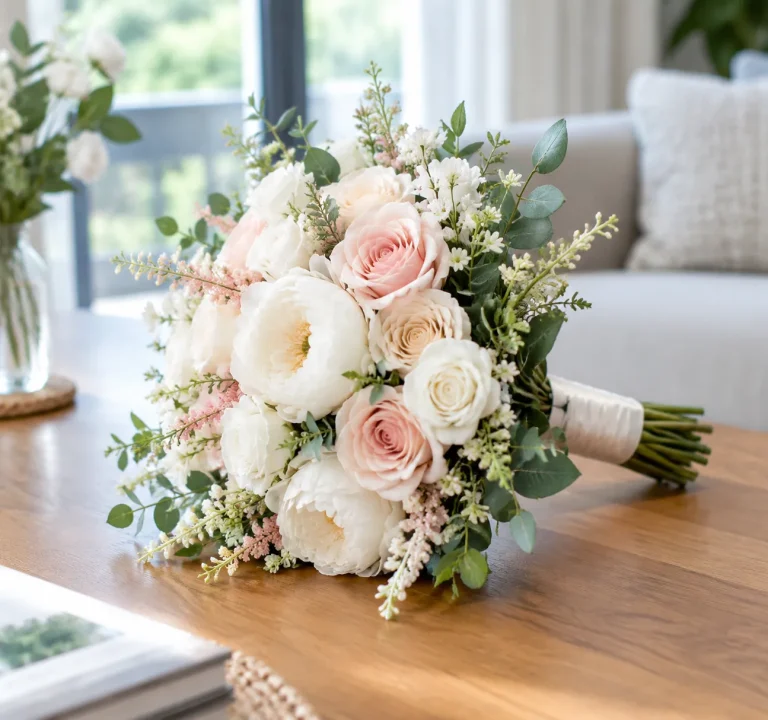
- Bridal Hand Bouquets: Real-touch stems finished with secure, professional wrapping for direct retail or rental use.
Home Decor and Retail Stems
For retail brands and floral wholesalers, consistency across unit counts and color palettes is critical. We produce single-branch collections and mixed seasonal bundles packaged for direct retail shelf placement.
- Single-Stem Variety: Our flexible wire-core artificial stems allow end customers to customize vase displays with zero stem breakage.
- Ready-to-Sell Packaging: Master cartons configured with barcode hangtags, retail-ready polybags, and inner protective sleeves.
- Seasonal Releases: Coordinated spring, fall, and holiday lines manufactured on predictable lead times for retail inventory cycles.
Commercial-Grade Artificial Plants and Greenery
Hospitality spaces, corporate offices, and retail centers need greenery that meets commercial safety codes and requires zero maintenance. We manufacture large-scale plants and decorative greenery engineered for heavy foot-traffic areas.
- Fire-Retardant Integration: Foliage treated during the polymer stage to meet standard commercial fire codes for indoor venues.
- UV-Stabilized Foliage: Outdoor-rated hedge panels and potted trees designed to resist sun fade and weather exposure.
- High-Impact Dividers: Durable faux boxwood and ficus barriers that provide natural acoustic dampening and space zoning for restaurants and office layouts.
Understanding Factory-Direct Sourcing for Artificial Flowers
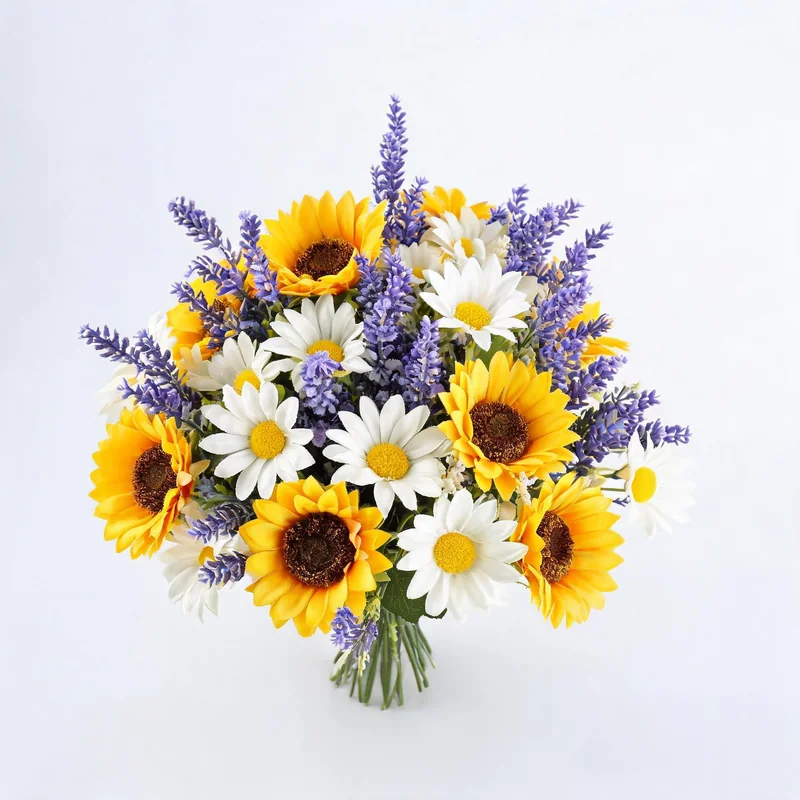
Securing high-margin floral inventory begins with understanding how the supply chain works. When we source artificial flowers factory-direct, we cut out the layers of domestic distributors, brokers, and trading agents who inflate unit costs without adding product value.
What Does Factory-Direct Sourcing Mean?
Factory-direct sourcing means contracting directly with the primary faux floral manufacturer that operates the physical production line. Instead of buying through third parties, you work directly with the factory that molds the plastic stems, dyes the fabrics, and assembles the petals. Sourcing wholesale artificial flowers direct from China gives you complete control over production schedules, material specifications, and unit pricing right from the production floor.
Factory Direct vs. Trading Companies: Key Differences
Many overseas suppliers present themselves as manufacturers but are actually trading entities that add a trading company markup of 20% to 50%. The structural differences between the two models are clear:
| Sourcing Factor | Direct Source Factory | Third-Party Trading Company |
|---|---|---|
| Pricing Structure | Baseline unit costs (EXW / FOB) | Marked-up catalog pricing |
| OEM Customization | Direct mold tooling and fabric dying | Limited to off-the-shelf options |
| Production Transparency | Direct batch inspection and real-time lead tracking | Relayed information and delayed updates |
| Quality Control | Strict factory-floor standards | Dependent on intermediary quality checks |
| Communication | Direct line to engineering and production | Message relayed through sales agents |
Why Buy Wholesale Artificial Flowers Direct from Manufacturers
Partnering directly with a proven source factory secures distinct operational advantages for high-volume retailers and commercial decorators:
- Maximum Margin Retention: Removing intermediaries immediately lowers your baseline cost per stem, allowing you to maximize resale profits or bid competitively on major commercial projects.
- Direct OEM & ODM Capabilities: Custom petal textures, specialized UV-resistant coatings, and private-label master packaging are easiest to execute directly with the engineering team.
- Consistent Batch Quality: Repeat orders maintain identical dye lots, stem flexibilities, and leaf textures across multiple container shipments.
- Scalable Production Capacity: Direct factory access guarantees reliable supply schedules for seasonal collections and large-scale commercial rollouts, as detailed in our bulk artificial flowers wholesale guide.
Wholesale Artificial Flower Pricing and Minimum Order Quantities (MOQs)
Buying directly from production floors changes your unit economics entirely. When you cut out intermediary trading houses, the base price of faux florals comes down to two major factors: raw material composition and manufacturing batch runs.
Understanding Wholesale Pricing Structures by Material
The cost of manufacturing artificial flowers depends on the tooling, polymer quality, and labor required per stem. We structure factory pricing across clear material tiers:
- Standard Polyester and Silk Fabric: The most cost-effective tier. Stems are stamped, heat-pressed, and assembled rapidly. Ideal for large-scale retail programs and budget-conscious bulk decor.
- Polyurethane (PU) Real-Touch: Mid-to-high tier pricing. PU molds replicate the tactile moisture and petal thickness of natural blooms. Sourcing wholesale silk wedding flowers at factory level gives you access to this premium real-touch finish without distributor markups.
- EVA Foam and High-Density Polyethylene (HDPE): Premium architectural and outdoor grades. EVA allows thick, structural petal formation, while HDPE injection provides durable, UV-stabilized stems and greenery.
| Material Tier | Primary Characteristics | Target Cost Level | Best Commercial Use |
|---|---|---|---|
| Basic Silk / Polyester | Lightweight, high color vibrancy | Low | Retail bulk stems, volume event backdrops |
| PU Real-Touch | Realistic petal feel, soft texture | Medium | Bridal bouquets, luxury retail displays |
| EVA & HDPE Plastics | Waterproof, fade-resistant, durable | Medium to High | Outdoor installations, heavy-use event rentals |
How to Negotiate MOQs with Overseas Manufacturers
Factories set Minimum Order Quantities (MOQs) based on raw material batch sizes, fabric dye runs, and mold setup times—not arbitrary sales quotas. You can negotiate workable MOQs using these direct strategies:
- Share Existing Dye Batches: Inquire about fabric runs already scheduled on the line. Ordering stems in standard, actively produced colors lowers minimums to as low as 100–300 pieces per style.
- Consolidate Stems by Material: Keep your material specifications consistent across different flower types so the factory can use the same raw resin or fabric stock.
- Commit to an Annual Volume Contract: Agree to a multi-order annual volume with scheduled release dates. This secures top-tier container pricing while splitting production shipments into manageable tranches.
Calculating True Landed Cost from Factory to Warehouse
The unit price quoted on an Ex-Works (EXW) or Free on Board (FOB) invoice is only the baseline. To secure real margins, calculate the true landed cost before issuing a purchase order:
$True Landed Cost = Factory Unit Price + Freight per Unit (CBM Share) + Customs Clearance & Tariffs + Inland Drayage + Insurance$
Artificial flowers are lightweight but high-volume cargo. We optimize stem bending and nested master carton packaging to maximize Cubic Meter (CBM) utilization in every container, preventing you from paying freight charges on empty air.
Popular Materials and Product Types in Bulk Artificial Flowers
When sourcing factory-direct floral products, knowing your materials helps you balance realism, durability, and production costs. Different manufacturing methods yield distinct textures, weights, and price points suited for specific wholesale markets.
Silk, Polyester, and Fabric Floral Collections
Fabric-based flowers remain an industry standard for high-volume orders. Most modern “silk” stems are crafted from tightly woven polyester blends coated to resist fraying and fading.
- Material Composition: Heat-pressed polyester fabrics, pongee, and synthetic silk blends.
- Key Advantages: Lightweight, cost-effective for large production runs, and compatible with high-definition digital dye printing for intricate petal gradients.
- Best Applications: Large-scale backdrop walls, budget-conscious event arches, and fast-moving retail stems.
For high-volume retail and staging, our catalog of wholesale silk flowers delivers rich color depth and dependable structural consistency across bulk production runs.
EVA, PE, and Real-Touch Premium Blooms
For commercial clients requiring lifelike botanical accuracy, polymer-based materials provide a true-to-life texture that closely mimics natural plant tissue.
- Polyurethane (PU) & Liquid Coating: Stems dipped in specialized polymer solutions create a cool, damp-feeling surface that mimics living petals. Evaluating real touch vs silk wedding flowers shows that polymer coatings excel in close-up photography and luxury staging.
- EVA Foam (Ethylene-Vinyl Acetate): Soft, dense, and water-resistant. Ideal for thick-petaled flowers such as calla lilies, tropical frangipani, and large-scale decorative installations.
- Polyethylene (PE): Injected-molded plastics used primarily for detailed greenery, succulent varieties, and structural branch designs that require sharp detail and long-term shape retention.
Best-Selling Styles: Wedding, Home, and Event Decor
We organize our factory production around the styles that yield the fastest turnover for wholesale buyers:
- Bridal Staples: Open garden roses, multi-petal peonies, ranunculus, and hydrangeas engineered with bendable, wire-reinforced stems for custom floral arrangements.
- Commercial Greenery: Seeded eucalyptus sprays, silver dollar branches, monstera leaves, and ficus sprays designed for filler applications.
- Pre-Assembled Floral Panels: Grid-backed flower walls and hanging floral runners optimized for fast event setup and teardown.
- Potted Home Decor: Pre-potted orchid arrangements and tabletop foliage packed directly in retail-ready master cartons to minimize handling costs.
How to Find and Vet Reliable Artificial Flower Factories
Finding a legitimate manufacturing partner is the most critical step to avoid trading company markups and secure bottom-dollar pricing. When sourcing at scale, working directly with a primary artificial flower manufacturer in China gives you direct access to production lines, stable material costs, and real-time lead time tracking.
Where to Search for Direct Artificial Flower Manufacturers
To bypass brokers and third-party agents, focus your search on direct industrial hubs and verified manufacturer channels:
- Manufacturing Clusters: Target dedicated production zones like Guangdong and Zhejiang, where raw material access keeps production costs low.
- Direct B2B Platforms: Filter specifically for verified production plants rather than trading entities by checking business licenses, factory floor area, and on-site machinery photos.
- Industry Trade Fairs: Source through major global expos like the Canton Fair to meet plant owners face-to-face and inspect full catalogs of factory-direct artificial flowers.
| Supplier Verification Checklist | True Manufacturer | Trading Company / Broker |
|---|---|---|
| On-Site Tooling & Molding | Yes (Dedicated workshops) | No (Outsourced) |
| Pricing Model | Direct Ex-Factory (EXW) | Marked up by 15% to 35% |
| MOQ Flexibility | High batch runs / Tiered volume | Fixed, rigid small batches |
| Production Transparency | Live video tours & audit access | Limited to office visits |
Evaluating Factory Customization Capabilities (OEM/ODM)
A qualified faux floral manufacturer should handle end-to-end OEM and ODM customization without compromising production speed. When vetting a partner for custom commercial runs, assess these core capabilities:
- Custom Tooling & Molds: The ability to craft custom petal textures, leaf veins, and realistic branch structures from CAD files or physical samples.
- Color Matching: Precise Pantone and CMYK color dyeing for seasonal collections and consistent batch-to-batch fidelity.
- Material Formulations: Expertise in specialized treatments, such as UV resistance for outdoor collections, flame-retardant coatings, and real-touch PU layering.
- Private Labeling & Packaging: Custom barcodes, inner boxes, and master carton configurations optimized to lower shipping volume and protect delicate blooms during transport.
Requesting Samples and Quality Assurance Checklists
Never commit to a full production run without completing a thorough sample inspection. When arranging sample testing for bulk purchasing, run through this practical quality checklist:
- Petal & Foliage Attachment: Firmly pull the flower heads and leaves to ensure secure bonding at all connection points.
- Stem Flexibility & Wire Gauge: Bend the stems repeatedly to verify that the internal steel wire flexes smoothly without snapping or poking through the outer plastic coating.
- Colorfastness & Odor Test: Rub damp white cloth over dyed petals to check for bleeding, and verify that the blooms are free of harsh chemical adhesive odors.
- Carton Drop Testing: Request photos of sample packaging drop tests to ensure petals do not crush or deform under transit pressure.
Ordering, Payment, and Logistics Optimization
Securing factory pricing is only half the battle; managing production schedules, payments, and freight dictates your real profit margins. We streamline the entire supply chain to ensure every floral shipment arrives intact, on schedule, and within budget.
Structuring Factory Payment Terms
Direct manufacturing runs require clear payment milestones to protect cash flow on both sides:
- Standard Terms: 30% deposit upon proforma invoice (PI) confirmation to begin mass production; 70% balance payable against the Bill of Lading (B/L) copy after passing pre-shipment quality inspection.
- Secure Payment Channels: Wire transfers (T/T) remain standard for bulk container loads, while Letter of Credit (L/C at sight) works best for large-scale enterprise contracts.
- Sample Fee Deductions: Prototype and sample development charges are credited back directly toward your initial bulk production invoice.
Freight and CBM Packaging Optimization
Artificial flowers and foliage are lightweight but voluminous. Freight costs are calculated on volumetric weight (CBM), making packaging engineering essential for reducing your total landed cost:
| Logistics Method | Best For | Transit Time | Cost Efficiency Strategy |
|---|---|---|---|
| Full Container Load (FCL) | High-volume retail and event orders | 25–40 days | Maximizes container space; reduces damage from intermediate handling. |
| Less than Container Load (LCL) | Seasonal replenishment and mid-tier runs | 30–45 days | Consolidated master cartons to maximize pallet density. |
| Air Freight / Express | Urgent showroom samples and rush event deadlines | 5–9 days | Compressed, nested floral heads to minimize cubic dimensional weight. |
Streamlined Export Workflow
- Order Finalization: We lock in all stem lengths, color codes (Pantone matching), and custom barcode/packaging specifications.
- In-Line & Final Inspection: Real-time photo and video verification of stem counts, box drop-tests, and color consistency before sealing cartons.
- Customs & Incoterms Management: We handle standard trade terms—from FOB (Free on Board) to DDP (Delivered Duty Paid)—managing export clearance, marine cargo insurance, and container loading optimization directly at the port.