Are you planning your dream wedding and asking yourself: are fake wedding flowers tacky?
The short answer? Not anymore.
Gone are the days of stiff plastic blooms that scream cheap. Today’s premium faux florals look so authentic that your guests won’t even be able to tell the difference.
In this guide, you’ll discover exactly how to make fake wedding flowers look expensive, from selecting the best real-touch materials to the insider styling tricks that guarantee stunning photos.
Are Fake Wedding Flowers Tacky? The Modern Answer
The short answer is no, fake wedding flowers are not tacky—provided you choose the right materials and styling methods. While artificial arrangements once carried a reputation for looking stiff and artificial, the modern wedding industry has embraced premium faux florals as high-end, design-forward alternatives to fresh cut blooms. High-grade faux botanicals are now routinely featured in luxury destination weddings, editorial shoots, and high-budget receptions where durability and structural perfection are paramount.
Why Fake Flowers Got a Tacky Reputation
The outdated stigma surrounding artificial wedding flowers stems from early production methods in the late 20th century:
- Low-Grade Polyester: Frayed petal edges and shiny synthetic weaves made flowers instantly identifiable as fake.
- Unnatural Color Saturation: Dyes were overly vivid, monochromatic, and completely lacked the subtle gradients found in living blooms.
- Rigid Plastic Stems: Stiff, shiny green plastic with obvious molding seams destroyed any illusion of organic movement.
- Flat Textures: Petals lacked botanical veining, depth, and the natural moisture-rich look of fresh flora.
How Modern Faux Florals Have Evolved
Technological advancements in botanical manufacturing have completely transformed artificial floral design:
- Real-Touch Polymers: Polyurethane (PU) and specialized latex coatings accurately replicate the cool, soft texture, weight, and density of live petals.
- High-Grade Micro-Silks: Precision-cut woven silks feature subtle color gradients, delicate veining, and realistic translucency under natural light.
- Botanical 3D Printing & Molding: Stems, thorns, calyxes, and bud centers are molded directly from live specimens, capturing organic imperfections and authentic textures.
What Makes Fake Wedding Flowers Look Cheap vs. Luxurious
Distinguishing between a dated arrangement and a luxury faux installation comes down to specific visual markers:
| Feature | Cheap Faux Florals | Luxurious Faux Florals |
|---|---|---|
| Coloration | Flat, single-tone color with no depth | Multi-tonal hues with natural shading and petal-edge variations |
| Texture & Sheen | Reflective, shiny fabric or plastic finish | Matte, velvety, or “real-touch” botanical finish |
| Structure | Perfectly identical, symmetrical blooms | Organic variation in bloom sizes, open stages, and bent stems |
| Stem Construction | Hollow, visible green plastic with flash seams | Wire-core flexible stems with realistic bark, moss, or natural tones |
| Durability | Prone to creasing, crushing, and fraying | Resilient, shape-retaining, and weather-proof |
Pros and Cons of Using Artificial Flowers for Your Wedding
Weighing the decision between fresh and faux blooms comes down to your priorities: flexibility, aesthetics, and overall return on investment. While old-school plastic arrangements gave faux botanicals a bad rap, evaluating the fake vs real wedding flowers pros and cons shows why so many modern couples now choose artificial alternatives.
| Factor | Artificial Flowers | Fresh Cut Flowers |
|---|---|---|
| Weather Resistance | Completely immune to heat, wind, and frost | High risk of wilting or browning in extreme weather |
| Allergy Risk | None (hypoallergenic) | Can trigger sneezing and allergic reactions |
| Setup Timeline | Assembled months in advance | Must be arranged hours before the event |
| Post-Wedding Value | Resellable or kept as keepsakes | Discarded within days |
| Natural Fragrance | None (requires scent sprays) | Natural, fresh aroma |
Key Benefits: Budget, Durability, and Seasonality
- Predictable Wedding Budget: High-grade faux blooms eliminate unexpected price surges caused by climate disruptions, shipping delays, or peak holiday surcharges.
- All-Day Durability: Faux botanicals never droop, drop petals, or brown in intense heat. Outdoor summer ceremonies and long photo sessions remain completely stress-free.
- Year-Round Seasonality: You can feature springtime peonies, fragile sweet peas, or rare garden roses in mid-winter without paying steep import premiums.
- Zero Allergic Reactions: Faux stems produce zero pollen, keeping the bridal party and guests comfortable throughout indoor receptions.
- Effortless Floral Preservation: Bouquets remain picture-perfect forever as home decor or can be resold post-wedding to recoup expenses.
Potential Drawbacks to Keep in Mind
- No Natural Fragrance: Premium artificial blooms carry no scent. If you love the aroma of fresh garden roses, you must mist arrangements with botanical room sprays.
- Quality Varies Widely: Cheap craft-store options often have frayed fabric, shiny plastic stems, and stiff petals that look artificial up close.
- Upfront Investment: Top-tier wedding artificial flowers made with real-touch coatings can cost as much upfront as fresh stems, though you regain value through resale and rental setups.
Do Artificial Wedding Flowers Look Good in Photos?
Camera lenses capture form, depth, and color gradation rather than cellular moisture. Premium faux botanicals often look cleaner in photographs than fresh flowers because they do not bruise, droop, or develop dry edges under warm lighting.
To ensure your arrangements look exceptional on camera:
Select matte-finish petals that absorb camera flashes instead of reflecting glare.
Use multi-tonal greenery with subtle stem variations to create dimensional contrast in portrait shots.
Keep stems secured tightly in bouquets so angles look effortless from every vantage point.
Types of Artificial Wedding Flowers and Materials
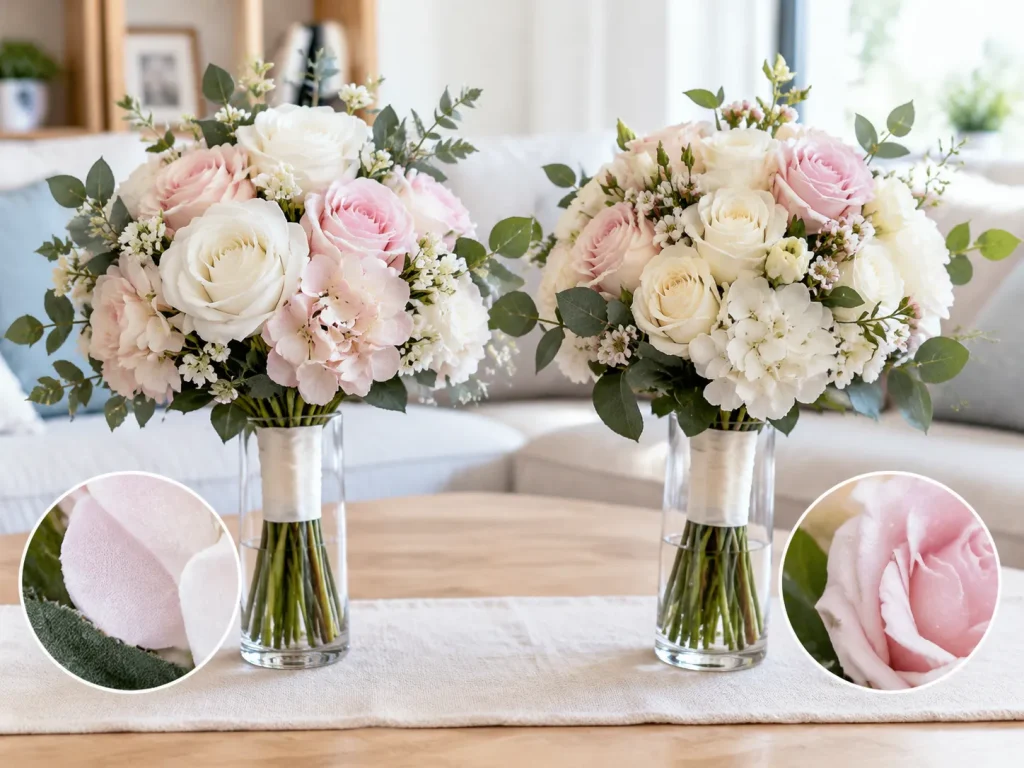
Choosing the right material makes all the difference between florals that look cheap and blooms that look convincingly high-end. When designing wedding arrangements, we look closely at petal texture, weight, and light reflection. Below is a breakdown of the primary materials used in modern artificial wedding florals.
| Material Type | Realism Level | Best Wedding Applications | Key Advantages |
|---|---|---|---|
| Real Touch (Polyurethane/Latex) | Highest | Bridal bouquets, boutonnieres | Realistic texture, flexible petals, photo-ready |
| Silk & Premium Polyester | High | Centerpieces, floral installations | Soft drape, subtle color gradients, lightweight |
| Foam & Wax-Coated | Moderate to High | Ceremony arches, hanging backdrops | High volume, crush-resistant, weather-proof |
| Sola Wood & Dried Mix | High (Textural) | Rustic arrangements, keepsakes | Eco-friendly, dyeable, long-lasting structure |
Real Touch and Polymer Flowers
Real-touch flowers represent the highest tier of modern floral manufacturing. Made from liquid polyurethane (PU) or specialized latex molds, these stems capture the distinct cool touch, vein textures, and structural thickness of living botanical petals.
- Best blooms: Calla lilies, magnolias, real-touch roses, and orchids.
- Why we use them: They do not fray at the edges, and they withstand close-up scrutiny in handheld bouquets.
Silk and Polyester Blooms
High-grade silk florals remain the classic standard for luxury event styling. Modern versions blend silk and micro-polyester to create lifelike petal movement and delicate color gradations that mimic natural light reflection. Knowing how to clean and maintain silk flowers keeps them pristine, dust-free, and wrinkle-free for your wedding setup.
- Best blooms: Peonies, hydrangeas, garden roses, and ranunculus.
- Key advantage: Exceptional softness and wide color availability from muted neutrals to deep jewel tones.
Foam and Wax-Coated Options
High-density foam and wax-dipped florals provide structural reliability and moisture-resistant finishes:
- Wax-coated stems: Coated to replicate the glossy, waxy sheen found on tropical foliage, camellias, and anthuriums.
- High-density foam blooms: Lightweight and uniform, making them an efficient choice for large-scale floral walls, overhead hanging installations, and high-impact ceremony arches where volume matters most.
Sola Wood and Dried Elements
Sola wood flowers are individually crafted from the soft balsa wood of the tapioca plant. They offer a distinct, organic matte texture that absorbs dye beautifully.
- Styling strength: Blending sola wood flowers with preserved dried foliage, pampas grass, and realistic faux greenery adds rich dimension and an earthy, sophisticated feel to both indoor and outdoor wedding decor.
How to Make Fake Wedding Flowers Look Expensive and Real
Creating a luxury floral aesthetic with artificial blooms comes down to styling techniques, material selection, and organic composition. By following professional floral design principles, you can elevate faux florals so they look indistinguishable from fresh, high-end botanical arrangements.
Choose High-Quality Materials and Realistic Stems
The quickest way to eliminate the cheap look of artificial blooms is to invest in the right textures. Standard polyester flowers often carry a synthetic sheen and frayed edges, instantly giving them away.
- Prioritize Real-Touch Stems: Real-touch polyurethane and coated silk mimic the soft, cool moisture and weight of live petals.
- Inspect the Stems and Seams: Low-end stems often have noticeable plastic mold lines. Look for wired, bendable stems with natural color variations, texturing, and thorn/leaf nodes.
- Conceal Visible Mechanics: Wrap bouquet stems in wide satin, raw-edge silk, or velvet ribbons to hide synthetic bases and exposed wire.
| Floral Component | Low-End / Unnatural Look | High-End / Realistic Upgrade |
|---|---|---|
| Petal Texture | Shiny, stiff polyester with raw cut edges | Coated real-touch latex or matte luxury silk |
| Stem Design | Rigid neon green plastic with molding seams | Flexible, wired stems with natural wood-grain texturing |
| Color Finish | Flat, single-tone dyes | Multi-tonal color gradients with natural edge variations |
Stick to Natural Color Palettes and Avoid Neon Shades
Real flowers rarely display a single, uniform tone. They feature subtle color gradations, undertones, and slight natural variations from petal to petal.
- Choose Multi-Tonal Blooms: Select petals with slight ombre shifts, darker centers, or soft green tinges on outer petals.
- Avoid Over-Saturated Tones: Highly saturated or neon tones immediately look artificial under bright photography lights.
- Embrace Muted, Organic Palettes: Shades like dusty rose, antique ivory, champagne, slate blue, and sage green look exceptionally realistic in artificial formats.
Mix Textures, Greenery, and Varying Stem Heights
Uniformity is the biggest indicator of fake arrangements. Nature is dynamic and asymmetrical, so building organic dimension into your arrangements is essential.
- Layer Realistic Faux Greenery: Integrate textured foliage like silver dollar eucalyptus, frosted lamb’s ear, olive branches, and Italian ruscus to break up large flower heads.
- Vary the Stem Heights: Never cut all stems to the same length. Stagger blooms at different levels so smaller bud flowers sit slightly higher than full focal blooms.
- Bend and Shape the Stems: Gently bend artificial stems outward to replicate natural flower growth rather than letting them stand straight up in rigid lines.
Blend Real and Fake Flowers Strategic Way
The hybrid method is one of the most effective strategies for maximizing realism while controlling costs. Combining both elements fools the senses through visual variety and natural scent.
- Pair Faux Blooms with Fresh Foliage: Using fresh, live greenery alongside high-grade silk florals provides a genuine botanical aroma and organic motion.
- Keep High-Touch Items Hybrid: In bridal bouquets, place fresh focal flowers (such as garden roses or peonies) right at the top where close-up inspection occurs, using durable faux stems underneath as structural support.
- Strategic Venue Placement: Use full faux installations for high-arch backdrops, hanging ceiling installations, and altar pillars, while reserving hybrid or live blooms for guest dining tables where people are seated close to the centerpieces.
Where to Use Artificial Florals in Your Wedding Decor
Strategic placement is the secret to elevating faux florals. By putting the highest-grade materials where guests look closely and using budget-friendly stems for high-impact overhead displays, you create a cohesive, luxury design that stays fresh all day.
Bridal and Bridesmaid Bouquets
Personal bouquets face the closest inspection of any floral element on your wedding day. When styling artificial bridal bouquets, focus on premium textures and natural movement:
- Use Real-Touch Materials: Build the focal points with premium latex-coated or 3D-printed blooms like garden roses, calla lilies, and open peonies that feel damp and velvety to the touch.
- Wrap the Handles Fully: Conceal artificial wire stems by wrapping the base tightly with raw silk, velvet, or satin ribbons, leaving trailing ribbon tails for added elegance.
- Keep Stems Varied: Avoid stiff, dome-shaped arrangements. Allow a few stems of faux greenery and accent blooms to sit higher than the main flowers for an organic, freshly picked silhouette.
Reception Centerpieces and Table Arrangements
Tablescapes demand a balanced approach to design, scale, and lighting. You can elevate centerpiece arrangements by combining lifelike textures with warm venue ambiance:
- Incorporate Ambient Lighting: Surround low-profile silk arrangements with pillar candles, taper lights, or tea lights. The soft, flickering glow softens petal textures and creates an upscale mood.
- Blend with Fresh Elements: Place real eucalyptus, ruscus, or olive branches around the base of your faux floral vessels to add a subtle natural fragrance.
- Coordinate with Venue Furnishings: Match table runner florals to your layout, whether you are dressing classic banquet tables or styling outdoor lounge zones outfitted with sleek patio furniture for sale outdoor dining and lounge sets.
Ceremony Arches and Backdrops
Large-scale installations are the most practical place to go 100% artificial. Ceremony arches, moon gates, chuppahs, and hanging floral installations require massive flower counts that would wilt quickly under direct sunlight or heat:
- Volume and Structure: High-grade silk florals and trailing faux vines provide dense coverage without the structural weight or water source requirements of fresh stems.
- Distance Advantage: Guests view ceremony backdrops from several feet away, making it impossible to distinguish premium faux flowers from live blooms.
- All-Day Durability: Faux arches withstand direct outdoor sun, wind, and temperature swings during long ceremony setups and can be effortlessly relocated to the reception stage or photo booth area without drooping.
Artificial vs. Fresh Wedding Flowers: Cost and Selection
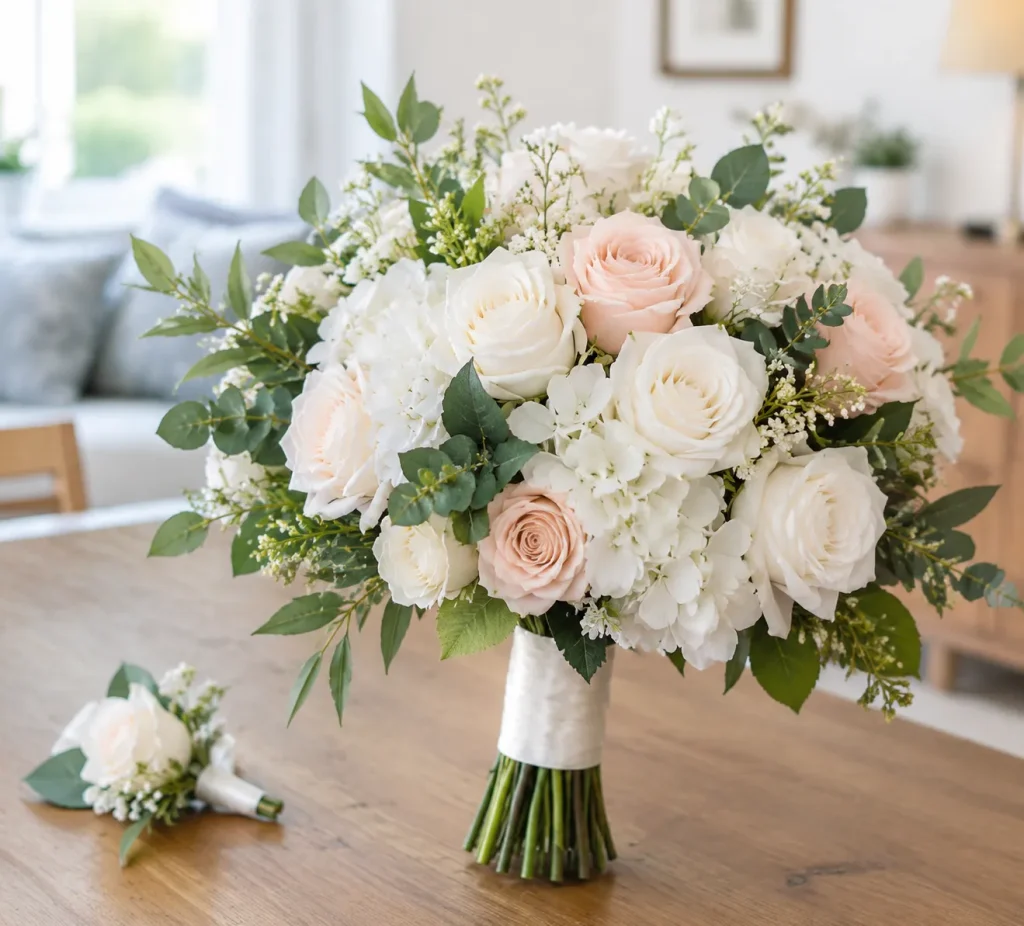
Choosing between fresh blooms and artificial alternatives comes down to balancing your bottom line with your event logistics. While high-grade faux florals require an upfront investment comparable to fresh stems, the total financial picture shifts dramatically once labor, durability, and post-event utility enter the equation.
Pricing Comparison and Budget Breakdown
The true cost of fresh florals often hides in the labor: refrigeration, specialized transport, water management, and day-of setup by a floral crew. Premium real-touch faux stems carry an initial purchase cost, but they eliminate emergency floral replacements, refrigeration fees, and preservation bills.
| Factor | Premium Artificial Florals | Fresh Cut Wedding Flowers |
|---|---|---|
| Upfront Purchase | Moderate to High (quality dependent) | High to Very High (season dependent) |
| Labor & Handling Fees | Low (easy pre-assembly and DIY) | High (requires professional installation) |
| Weather & Wilting Risk | Zero (heat, wind, and frost-proof) | High (sensitive to temperature and water) |
| Setup Flexibility | Weeks or months in advance | Morning-of-event rush |
| Post-Wedding Value | Resellable at 50%–70% of value | Discarded or $200–$600 preservation cost |
By eliminating perishable risks and costly last-minute logistics, faux florals allow you to lock in your design months ahead without surprise seasonal surcharges.
How to Choose Between Faux and Real Blooms
To determine whether artificial or fresh stems fit your setup, evaluate your venue conditions, timeline, and long-term plans:
- Venue Climate and Environment: For direct outdoor sunlight, midsummer heat, or breezy coastal celebrations, high-grade faux florals eliminate the risk of dropped petals and drooping heads before the reception even begins.
- Timeline and Prep Stress: If you want your arrangements completed weeks in advance to avoid wedding-morning chaos, artificial florals provide complete control over every placement with zero water needs.
- Return on Investment: If recouping event costs is a priority, faux arrangements can be rented out or resold on pre-owned wedding platforms to recoup a substantial portion of your decor budget.
- Tactile and Scent Priorities: If the organic fragrance of garden roses is essential to your ceremony, reserve fresh blooms for your immediate bridal bouquet and table centerpieces, then rely on faux stems for arches, hanging installations, and elevated backdrop displays.
Frequently Asked Questions About Fake Wedding Flowers
Can guests tell if wedding flowers are fake?
When you choose premium materials, guests rarely notice the difference. Modern high-grade botanicals mimic organic petal veining, stem textures, and subtle color gradients found in nature. Guests only notice faux florals when lower-grade materials with fraying edges or high-gloss plastic finishes are used. To ensure your arrangements fool the closest eye, explore our realistic artificial flowers designed with lifelike detail for close-up viewing during ceremonies and photos.
Is it cheaper to rent or buy artificial wedding flowers?
Both options offer significant savings compared to fresh floral installations, but the right choice depends on your post-wedding plans:
- Renting: Ideal for couples wanting high-end, large-scale ceremony arches and lush centerpieces without the hassle of post-event storage or disposal.
- Buying: Best for bridal party keepsakes, sentimental bouquets, or couples looking to resell arrangements to recoup a portion of their initial wedding budget.
How do I clean and store faux florals before the big day?
Proper preparation keeps your botanical displays looking pristine from setup to reception:
- Dust Removal: Use a handheld hairdryer on the lowest, cool setting or a feather duster to clear any loose particles.
- Reshaping Petals: Gently steam compressed blooms with a garment steamer held a few inches away to restore full volume and remove shipping creases from delicate silk flowers.
- Safe Storage: Keep assembled arrangements inside breathable garment bags or sturdy storage totes in a cool, dry room away from direct sunlight to prevent premature fading.